What It Really Means to Get Your Hardwood Floors Refinished
Hardwood floors refinished properly can completely transform a room — and add real value to your home. But knowing what the process involves, and which type of refinishing you actually need, saves you time, money, and frustration.
Here’s a quick overview of what getting hardwood floors refinished means:
| Method | Best For | Typical DIY Cost* | Time to Complete |
|---|---|---|---|
| Screen and recoat | Dull finish, light wear | $200–$500 | 1 day |
| Full refinishing | Deep scratches, bare wood, stains | $500–$1,000 | 3–5 days |
| Professional refinishing | Severe damage, thin or engineered floors | $1,100–$9,000+ | 3–7 days |
*Average costs based on internet data, not actual Romero Hardwood Floors pricing.
The core idea is simple: sanding removes the old, worn finish (and sometimes a thin layer of wood), then a fresh stain and protective topcoat are applied. The result? Floors that look new again — without the cost of replacement.
But the details matter a lot. The wrong sanding approach on the wrong floor type can cause permanent damage. And skipping steps in the finishing process leads to peeling, bubbling, and uneven color.
That’s what this guide covers — the full picture, step by step.
I’m Francisco Romero, owner of Romero Hardwood Floors Inc., with over 15 years of hands-on experience helping homeowners and commercial clients in Revere, MA get their hardwood floors refinished the right way. In that time, I’ve seen every floor type and every common mistake — and I’ll share what actually works.
Hardwood floors refinished helpful reading:
Assessing Your Wood: Screen and Recoat vs. Full Refinishing
Before we pick up a sander, we have to determine if your floor actually needs a “total makeover” or just a “facial.” At Romero Hardwood Floors Inc., we always start with an assessment because the thickness of your wood dictates your options.
Identifying Floor Types
Not all wood is created equal. We typically encounter three main types in the North Shore and Greater Boston area:
- Solid Hardwood: These are solid planks of wood (usually 3/4-inch thick). They can be sanded and refinished many times — often up to 10 times over a century.
- Engineered Wood: These consist of a real wood veneer glued over a plywood-like core. Because the top layer is thin, they can usually only be refinished once or twice at most.
- Prefinished Floors: These come from the factory already stained and sealed with a very hard aluminum oxide finish. They can be refinished, but they require more aggressive initial sanding to break through that factory seal.
To see what you’re working with, we recommend checking an HVAC floor grate or looking at a closet edge where the wood ends. This allows you to see the side profile of the plank and measure the “wear layer” (the wood above the tongue and groove). If you have less than 1/8-inch of wood left, a full sand is risky. For more on the basics, check out our guide on hardwood floor installation.
Determining Floor Condition
How do you know which method to choose?
- Screen and Recoat: If your floor is just dull or has light surface scratches but no bare wood showing, we can “screen” it. This involves scuffing the existing finish with a buffer and applying a new topcoat. It’s faster, cheaper, and dust-free.
- Full Refinishing: This is necessary if you see bare wood, deep pet stains, “cupping” (where the edges of the planks are higher than the center), or “crowning” (where the center is humped up). These structural issues or deep stains require sanding down to the raw wood.
| Feature | Screen and Recoat | Full Refinishing |
|---|---|---|
| Removes Scratches? | Surface only | Yes, even deep ones |
| Changes Color? | No | Yes, with new stain |
| Fixes Warping? | No | Yes |
| Dust Level | Minimal | High (unless professional vacuum used) |
Preparation and Essential Safety Precautions
Preparation is 70% of the job. If we don’t prep correctly, the finish will fail, and your house will be covered in fine dust for months. We’ve seen DIYers spend five hours cleaning at 3 AM because they didn’t seal the room properly — don’t be that person!
Essential Tools to Get Hardwood Floors Refinished
To get hardwood floors refinished to a professional standard, you need more than just a hand sander. Here is the heavy hitter list:
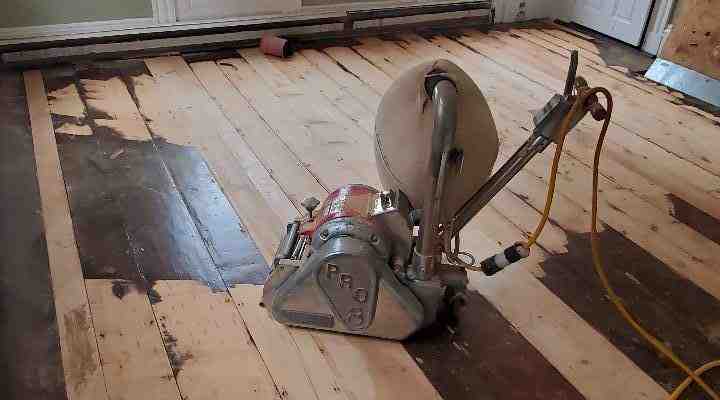
- Drum Sander: The beast that does the heavy lifting in the middle of the room.
- Floor Edger: A smaller, high-speed disc sander for the edges where the drum can’t reach.
- Orbital Sander: Used for fine-tuning and smoothing out marks left by the bigger machines.
- Buffer: Used for “screening” between coats and the final smoothing pass.
- Safety Gear: This is non-negotiable. You need a respirator with organic vapor cartridges, ear protection, safety goggles, and heavy-duty kneepads.
indoor air quality during sanding is a serious concern. Sawdust is not just messy; it’s a respiratory irritant and, in large quantities, a fire hazard.
Pre-Sanding Room Prep
Before the machines start roaring, we follow a strict checklist:
- Clear the Room: Everything must go — furniture, rugs, and curtains.
- Remove Molding: Carefully pry up baseboards or shoe molding. We recommend numbering the back of each piece so you know exactly where it goes later.
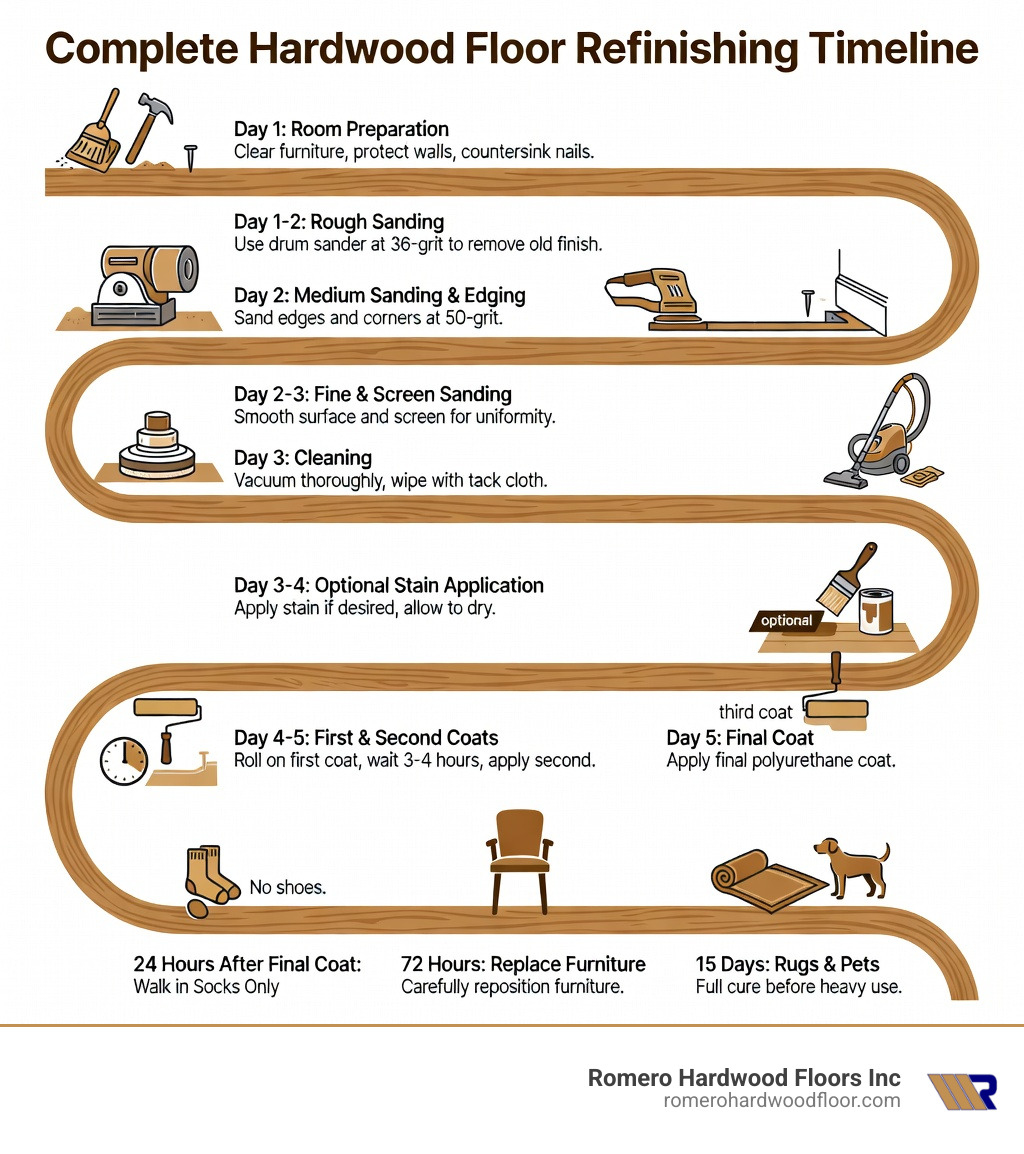
- Nail Countersinking: Check the floor for any protruding nails. Use a hammer and nail set to drive them below the surface. A single nail can rip a $10 sanding belt in seconds.
- Seal the Zone: Use plastic sheeting and painter’s tape to seal off doorways, vents, and cabinets. Turn off your HVAC system to prevent dust from traveling through the vents to the rest of your home in Beverly or Salem.
The Step-by-Step Process to Get Your Hardwood Floors Refinished
Sanding is an art of progression. You don’t just “sand it flat”; you gradually refine the surface until it’s as smooth as glass.
Sanding Grit Progression
We never skip more than one grit level. If you start too fine, you’ll never get the old finish off. If you stay too coarse, the stain will look blotchy.
- 36-Grit (Rough Cut): This removes the old finish and levels the wood.
- 50-Grit (Medium Cut): This removes the deep scratches left by the 36-grit pass.
- 80-100 Grit (Fine Cut): This is the final pass that prepares the wood for stain or sealer.
Always sand with the grain of the wood. When using the drum sander, keep it moving at all times. If you stop for even a second while the drum is down, you will create a permanent “divot” or “valley” in your floor. For a deeper dive, read our expert tips on hardwood floor sanding.
Cleaning and Tacking
Once the sanding is done, the floor must be surgically clean. We vacuum the floor at least three times, including the tops of window sills and door frames where dust likes to hide. The final step is “tacking” — using a microfiber cloth or a towel dampened with mineral spirits to pick up the microscopic particles that a vacuum misses. If you leave dust behind, it will get trapped in your finish, creating “dust nibs” that feel like sandpaper under your socks.
Choosing Your Finish: Stains and Polyurethanes
Now comes the fun part — choosing the look. Whether you’re in a historic home in Danvers or a modern condo in East Boston, the finish defines the vibe.
Water-Based vs. Oil-Based Polyurethane
- Water-Based Poly: This is our most popular choice. It dries fast (3-4 hours), has low odor (low VOCs), and stays clear, which is great if you want that natural “Scandinavian” look. You can apply up to two coats in a single day.
- Oil-Based Poly: This gives the wood a warm, amber glow. It’s very durable and more “forgiving” to apply, but it smells strong and takes 8-24 hours to dry between coats. It will yellow over time, which some people love for that classic “old world” feel.
Pro Tip: Water Popping. If you’re choosing a dark stain, we often “water pop” the floor. This involves lightly misting the raw wood with water to open the grain, which allows the wood to soak up the stain more deeply and evenly.
Applying the Finish
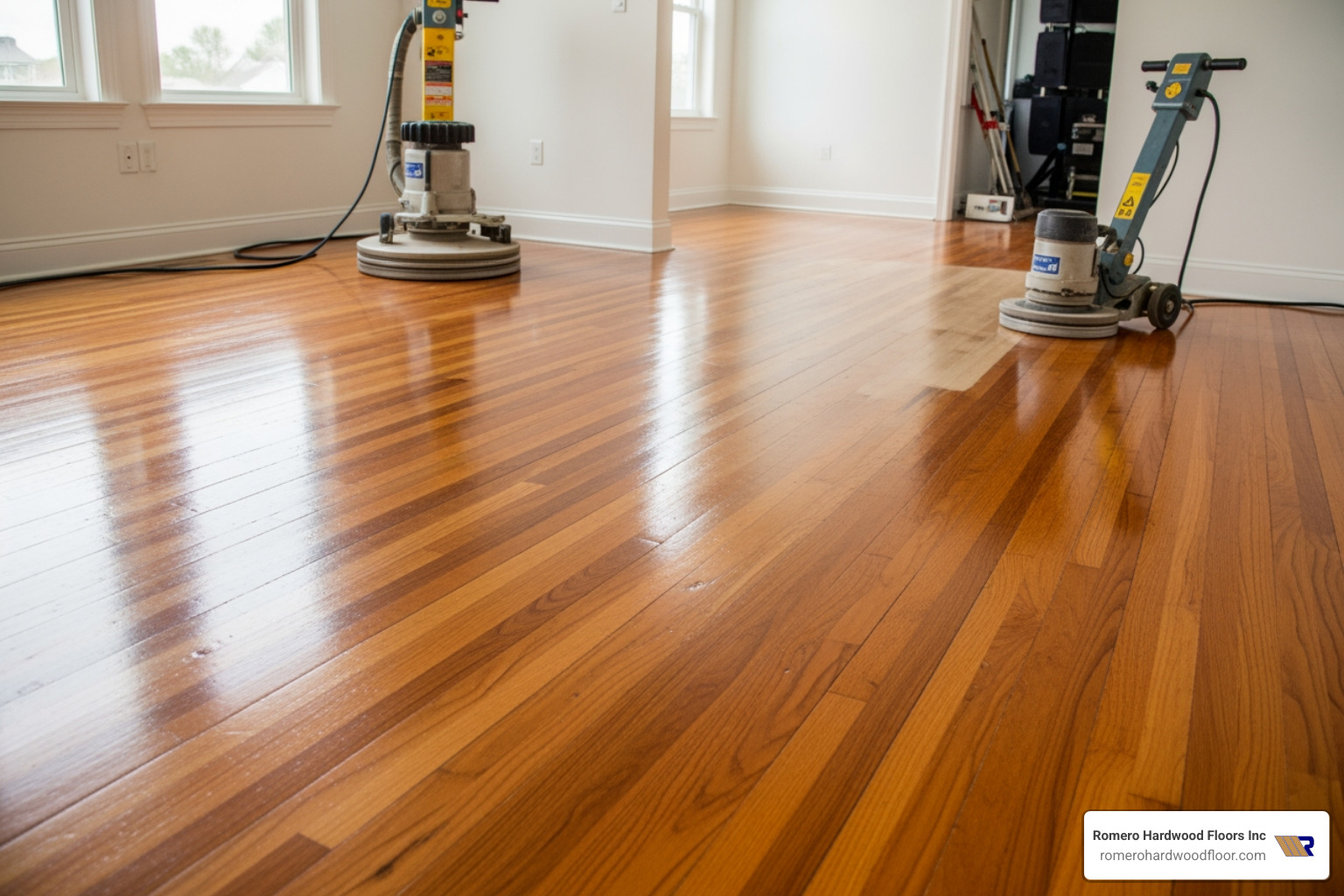
We use a lambswool applicator or a high-quality roller for the main floor and a brush for the edges. The key is maintaining a “wet edge.” You want to work quickly so that the edge of your finish doesn’t dry before you start the next row. If it dries, you get “lap lines” — ugly visible streaks where the finish overlapped.
Common Mistakes When Getting Hardwood Floors Refinished
- Sander Divots: Letting the drum sander sit in one spot.
- Skipping Grits: Trying to go from 36-grit straight to 100-grit. The fine paper won’t be able to smooth out the deep gouges from the rough paper.
- Rushing Dry Times: Applying a second coat before the first is fully dry will cause the finish to peel or stay tacky forever.
- Improper Ventilation: Not having enough airflow to exhaust fumes, or having too much airflow that blows dust onto the wet finish.
DIY vs. Professional: Costs and Realistic Expectations
We love the DIY spirit, but hardwood floors refinished by a novice can sometimes lead to expensive repairs. Let’s look at the numbers.
Is DIY Worth It?
DIY refinishing is physically exhausting. You will be wrestling a 100-pound machine and spending hours on your knees with an edger. If you have a house built in the 1960s (common in Saugus or Peabody), you likely have 1/4-inch thin red oak floors. These are notorious for splintering if you use a drum sander too aggressively. For these thin floors, we often recommend a “screening” method using an orbital sander rather than a drum sander to prevent destroying the wood entirely.
Cost Comparison and Value
Based on internet data, here is what you can expect for a standard 1,000-square-foot project:
- DIY Cost: $500–$1,500. This includes machine rentals, sandpaper, stains, and high-quality polyurethane.
- Professional Range: $3,000–$9,000+. The wide range accounts for “dustless” systems, high-end finishes, and the complexity of the layout (stairs and closets add cost).
Labor accounts for about 80% of a professional quote. You are paying for the expertise to avoid divots, the high-end equipment that sucks up 99.9% of the dust, and the guarantee that the job will be done in days, not weeks. At Romero Hardwood Floors Inc., we pride ourselves on punctuality and guaranteed workmanship to ensure your investment pays off in home equity.
Frequently Asked Questions about Refinishing
How many times can hardwood floors be refinished?
It depends on the thickness. A standard 3/4-inch solid plank can be refinished 4 to 10 times. However, if the floor has been sanded aggressively in the past and you can see the tops of the nails (the “fasteners”), you may be at the end of the floor’s life. Engineered wood can usually only handle 1 or 2 light sandings.
How long until I can walk on my refinished floors?
Patience is key here!
- 24 Hours: You can usually walk on the floors in clean socks. No shoes, no bare feet (body oils can mess with the curing).
- 72 Hours: You can carefully move furniture back. Use felt protectors on every single leg!
- 15 Days: This is the “Full Cure” period. Do not put down area rugs or allow pets with claws on the floor until day 15. Rugs can trap gases and cause the finish to change color or fail to harden.
Can you refinish thin or 1960s hardwood?
Yes, but with caution. If your floor is only 1/4-inch thick, a drum sander might be too much. We often use a “screening” process or a multi-disc orbital sander. This removes the finish without eating away too much of the precious remaining wood. If you aren’t sure, we’re happy to provide a professional evaluation in any of our service areas, from Gloucester to Somerville.
Conclusion
Getting your hardwood floors refinished is one of the most rewarding home improvement projects you can undertake. It breathes new life into your space, removes years of allergens trapped in old finishes, and makes your home shine. Whether you decide to tackle a small room yourself or hire a crew for the whole house, the key is respect for the wood and patience with the process.
At Romero Hardwood Floors Inc., we’ve been serving the North Shore and Greater Boston area since 2006. From Revere to Winchester, we help homeowners protect their investment with expert sanding, staining, and finishing. We know the local architecture, the humidity challenges of the Massachusetts coast, and exactly what it takes to make your floors happy again.
Ready to see what your floors could look like? Request an estimate today, and let’s get started on your transformation!