
Why Water Stains Threaten Your Hardwood Investment
Hardwood floor water stain removal is often simpler than you think—if you catch it early. Here’s what you need to know:
Quick Solutions by Stain Type:
- White/Light Stains (surface level): Use an iron with a cloth, baking soda paste, or non-gel toothpaste
- Dark/Black Stains (deep penetration): Apply hydrogen peroxide or oxalic acid; severe cases may require sanding and refinishing
- Prevention: Clean spills immediately, maintain humidity at 35-55%, and refinish floors every 7-10 years
Water stains on hardwood floors aren’t just unsightly—they signal real damage happening beneath the surface. A white ring from a wet glass might only affect the finish layer. But a dark, spreading stain? That means water has penetrated deep into the wood fibers, potentially causing rot or triggering mold growth.
The good news: most water stains are fixable. The bad news: the longer you wait, the more expensive the repair becomes. What starts as a $0 DIY fix with household items can turn into a $1,500+ refinishing project if moisture reaches your subfloor.
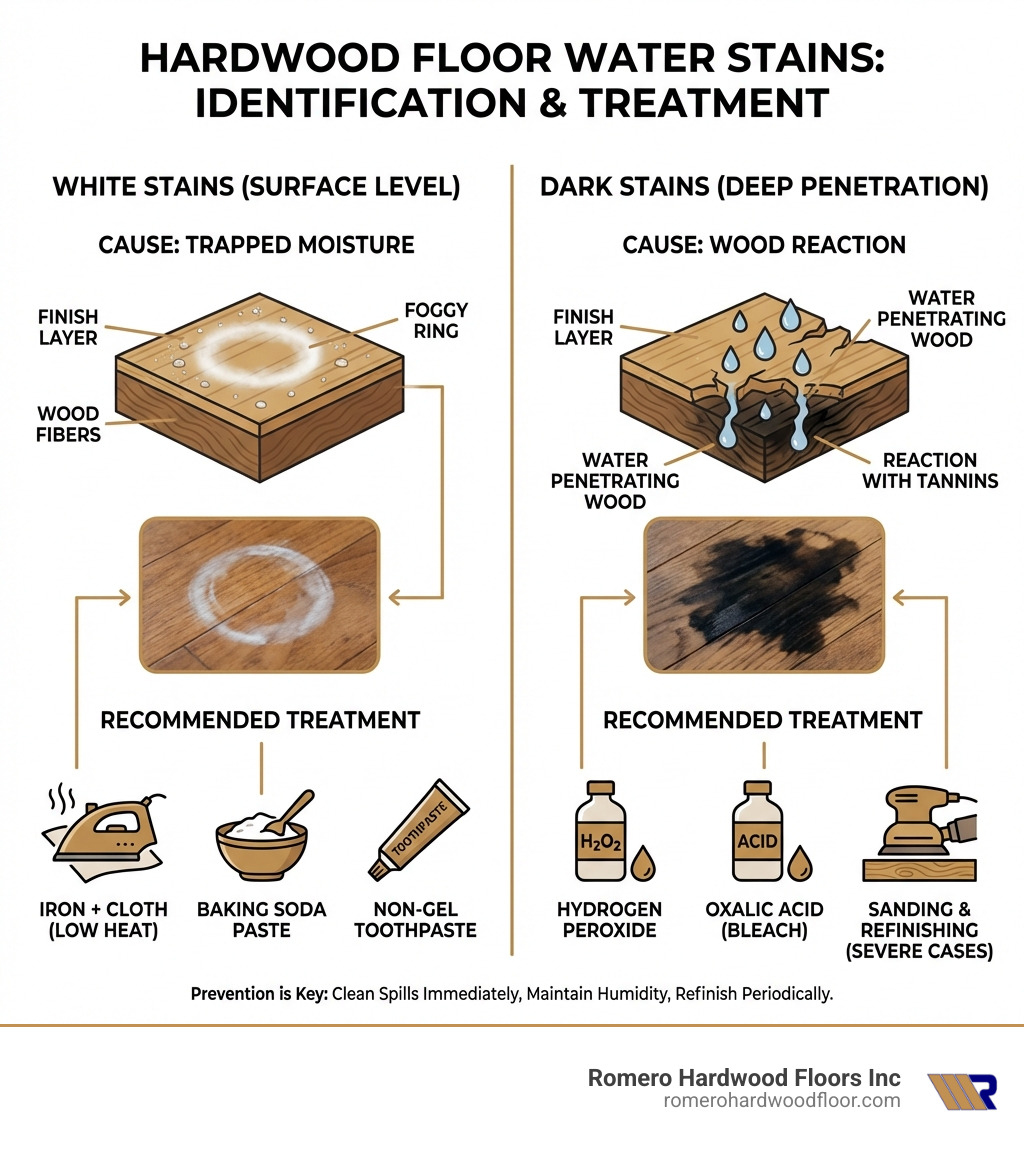
Understanding what you’re dealing with is the first step. White stains form when moisture gets trapped in your floor’s finish—think of it like fog on a window. Dark stains mean water has broken through that protective barrier and is reacting with the wood’s natural tannins or iron deposits. Each type requires a different approach.
I’m Francisco Romero, owner of Romero Hardwood Floors Inc. in Revere, MA. Over the past 15+ years, I’ve restored hundreds of floors damaged by everything from burst pipes to pet accidents, and I’ve seen how quickly hardwood floor water stain issues can escalate when homeowners don’t know what steps to take. In this guide, I’ll walk you through exactly how to identify, remove, and prevent water stains—so you can protect your investment and keep your floors looking beautiful for decades.
Important hardwood floor water stain terms:
- how to repair a water damaged hardwood floor
- black mold on hardwood floors
- signs of mold under hardwood floors
Understanding the Different Types of Water Stains
When we walk into a home in Salem or Marblehead to inspect a floor, the first thing we look at is the color of the stain. The color tells us exactly where the water is sitting. Hardwood is naturally porous, meaning it acts like a sponge. However, the finish (the sealant on top) is designed to be a shield.
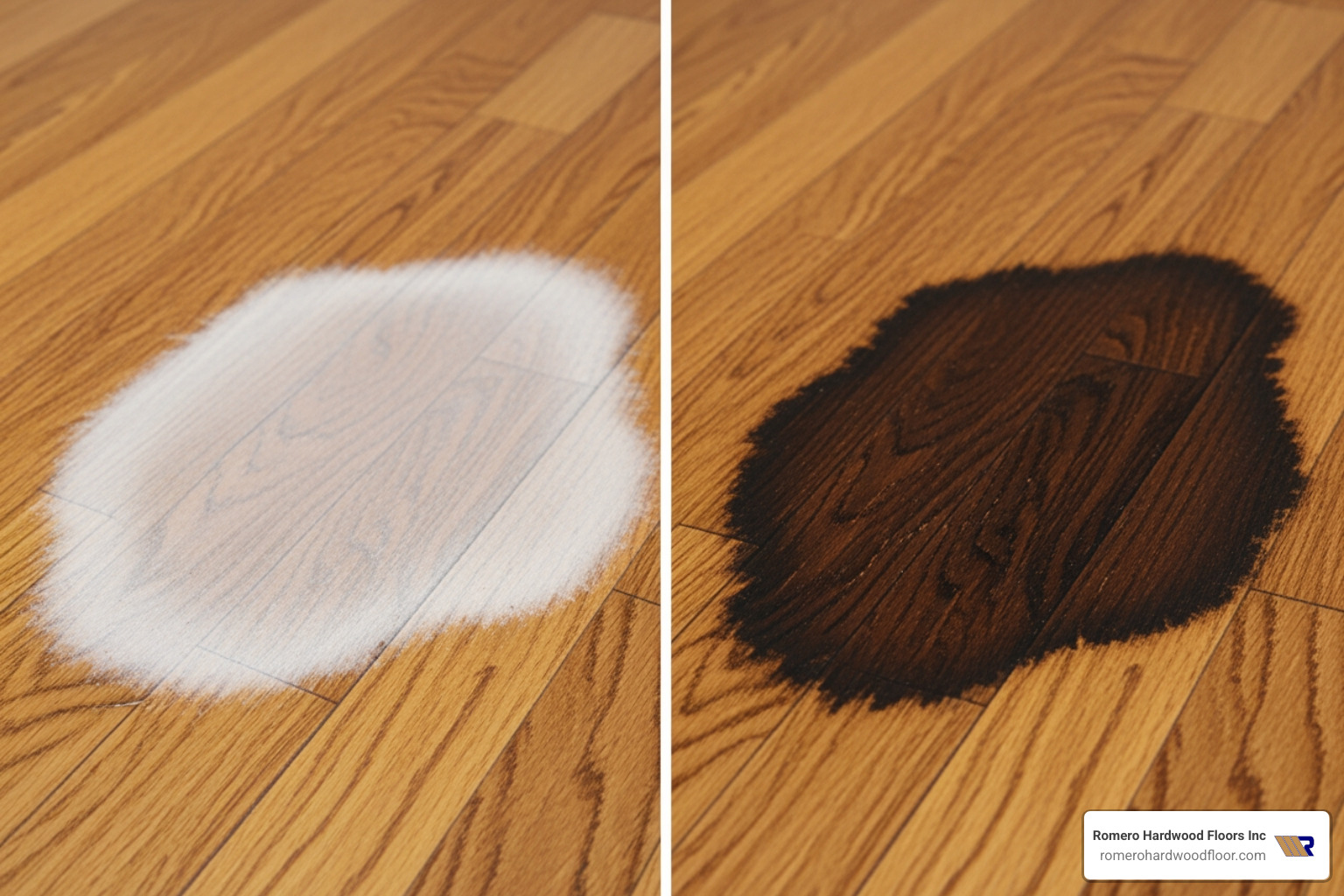
A hardwood floor water stain generally falls into one of two categories: white or dark. The difference lies in whether the water has stayed in the finish or moved into the wood itself. If the finish is worn out—which typically happens every seven to ten years—the wood is defenseless.
For a deeper dive into the mechanics of moisture, check out our hardwood floor water damage ultimate guide.
Identifying a White hardwood floor water stain
If you see a hazy, milky, or white ring, take a deep breath—this is usually good news. A white hardwood floor water stain means the moisture is trapped inside the wax or polyurethane finish layer but hasn’t reached the wood grain yet.
These are common in kitchens or living rooms where a cold glass sat too long or a small spill wasn’t wiped up immediately. Because the moisture is “trapped vapor,” it often looks like a cloud. We often see these in North Shore homes during the humid summer months when condensation is at its peak. To keep your floors clean without causing these issues, follow our hardwood floors cleaning tips.
Identifying a Dark hardwood floor water stain
A dark or black hardwood floor water stain is more serious. This color change indicates that water has bypassed the finish and moved into the wood fibers. The darkness is often a chemical reaction between iron ions in the water and the natural tannins found in wood (especially in Red Oak, which is very common in Medford and Somerville).
In some cases, the black color is a warning sign of mold growth or wood rot. These stains often come from “silent killers” like a leaking refrigerator line, a porous terracotta planter pot, or a pet accident that went unnoticed. If you’re seeing these, you’ll want to learn how to fix wood floor water damage before the structural integrity of the planks is compromised.
How to Remove a Light hardwood floor water stain
If you’ve identified your mark as a white surface stain, you can often play hero with items already in your pantry. The goal here is to draw the moisture out of the finish without scratching it.
- The Iron Method: This is our favorite “pro trick” for white rings. Place a clean, dry cotton cloth over the stain. Set your clothes iron to a low, no-steam setting. Gently run the iron over the cloth for 10-second intervals. Check the floor frequently. The heat helps evaporate the trapped vapor.
- Baking Soda Paste: Mix two parts baking soda with one part water. Rub the paste gently in the direction of the grain. This acts as a very mild abrasive to “buff out” the moisture.
- Non-Gel Toothpaste: Similar to baking soda, the mild abrasives in white (non-gel) toothpaste can lift surface stains. Use a soft cloth and circular motions.
- The Mayonnaise Trick: It sounds weird, but the oils in mayonnaise can sometimes displace the water in the finish. Dab a bit on the stain, let it sit overnight, and wipe it away in the morning.
For more general upkeep, see our wooden floor maintenance tips.
Effective Methods for Removing a Deep hardwood floor water stain
Dark stains require a more aggressive approach because you are essentially “bleaching” the wood fibers back to their original color.
Using Three Percent Hydrogen Peroxide
We’ve found that three percent hydrogen peroxide is a fantastic DIY tool for dark stains. Soak a clean cloth in the peroxide and dab the stain. For stubborn spots, you can leave the soaked cloth on the area for about 20 minutes.
Caution: You may be “trading a dark stain for a light stain.” Hydrogen peroxide is a bleaching agent and can over-lighten the wood if you aren’t careful.
Oxalic Acid (Wood Bleach)
For those deep, blackened iron-tannin stains, oxalic acid is the heavy hitter. You mix the crystals with hot water and apply it to the bare wood (you’ll need to sand off the finish first). It dissolves the iron ions that cause the blackening. Always neutralize the area with vinegar afterward to stop the chemical reaction.
If the stain is accompanied by a musty smell, you may be dealing with black mold on hardwood floors, which requires immediate professional attention to ensure your family’s health.
When Sanding and Refinishing is Necessary
Sometimes, a hardwood floor water stain is just the tip of the iceberg. If the wood has absorbed enough water to change its shape, topical cleaning won’t help.
Watch out for these structural changes:
- Cupping: The edges of the boards are higher than the center, creating a wavy “washboard” look. This happens when the bottom of the board is wetter than the top.
- Crowning: The center of the board humps up. This often happens if you sand a cupped floor before it is fully dry.
- Buckling: The most severe stage, where the boards actually lift several inches off the subfloor.
If the boards are structurally sound but the stains are widespread, a full sand and refinish is the best way to restore your home’s value. We specialize in hardwood floor refinishing in Beverly, MA and surrounding areas, using dustless sanding to keep your home clean.
| Feature | DIY Cleaning | Professional Refinishing |
|---|---|---|
| Best For | Single surface rings | Widespread damage/Deep stains |
| Cost | $5 – $50 | $3 – $15 per sq. ft. |
| Time | 1 hour | 3 – 5 days |
| Result | Spot fix | Like-new appearance |
Average Costs for Professional Restoration
When considering professional help, it’s important to understand the market. Based on internet data, the estimated cost of hardwood floor repair and refinishing can vary wildly. These are average costs and not actual quotes for Romero Hardwood Floors.
- Refinishing: $3.00 to $15.00+ per square foot.
- Board Replacement: $200 to $800+ for small patches.
- Full Restoration: For severe flooding, costs can exceed $10,000 depending on the square footage.
Note: Always get a professional on-site estimate, as the species of wood (like exotic Tigerwood vs. standard Oak) can impact the price.
Preventing Future Water Damage and Stains
In the humid climate of the Massachusetts North Shore—from Lynnfield to Gloucester—moisture management is a year-round job.
- Control Humidity: Use a hardwood floor dehumidifier to keep indoor humidity between 35% and 55%. This prevents the wood from expanding and contracting too much, which can crack your finish and let water in.
- Maintenance Coatings: Don’t wait for the wood to turn gray. Perform a “water drop test”: put a drop of water on your floor. If it beads up, you’re safe. If it soaks in, your finish is gone and you need a new coat of polyurethane.
- Strategic Rug Placement: Place mats at every entrance and under kitchen sinks. Just make sure they don’t have rubber backing, which can trap moisture and cause a hardwood floor water stain itself!
- Manage Standing Water: Following CDC guidelines on managing standing water, always dry floors immediately after any leak. Even a few hours of standing water can trigger mold growth.
Frequently Asked Questions about Water Stains
How does humidity affect hardwood floors?
Wood is “hygroscopic,” meaning it shares a relationship with the air. In the damp summers of Revere and Chelsea, wood absorbs moisture and expands. In the dry winters of Reading and Stoneham, it shrinks. This constant movement can cause “cupping” or gaps. Maintaining a stable environment is the secret to a long-lasting floor. See our hardwood floor care guide for more.
Can I use vinegar on a hardwood floor water stain?
We generally advise against it. Vinegar is an acid. While it can help neutralize wood bleach, using it as a general cleaner can dull your finish over time. For more info, read what you need to know before you spray all-purpose cleaners.
When should I call a professional for water damage?
If your floor feels “squishy,” if you see black mold, or if the boards are physically lifting (buckling), you need a hardwood floor repair specialist. At that point, the water has likely reached the subfloor, and DIY methods could actually trap the moisture and make it worse.
Conclusion
A hardwood floor water stain doesn’t have to be the end of your beautiful flooring. Whether it’s a simple white ring that needs a quick buff or a deep dark stain requiring professional hardwood floor water damage repair, there is always a solution.
At Romero Hardwood Floors Inc., we’ve been serving the Revere, MA community and the surrounding North Shore for nearly two decades. We pride ourselves on punctuality, competitive pricing, and workmanship that we guarantee. Your home is your biggest investment—don’t let a little water wash away its value.
If you’re in Beverly, Malden, or anywhere in our service area and you’re worried about water damage, don’t wait for the wood to rot. Contact us today for a professional assessment and let’s get your floors looking like new again.
