
Steam Mop Timber Floors: 1 Fatal Error!
The Steam Mop Dilemma: Should You Risk Your Wood Floors?
Steam mop timber floors are a hot topic for homeowners seeking an easy, chemical-free clean. These popular devices promise sparkling floors and claim to be safe for all surfaces—including wood. But what’s the reality?
Should You Use a Steam Mop on Timber Floors?
- No, steam mops are NOT recommended for timber floors by major flooring associations
- Steam heats water to 120-200°F, far exceeding safe temperatures for wood (85-95°F)
- All types of wood flooring are at risk: solid hardwood, engineered wood, and laminate
- Even “sealed” floors are vulnerable through gaps, scratches, and worn finishes
- Using a steam mop will likely void your flooring warranty
- Safe alternatives exist: microfiber mops with pH-neutral cleaners work better
The appeal is clear: sanitize floors with just water, no chemicals. They’re fast, easy to use, and marketed as perfect for every floor. But what those ads don’t tell you is that wood and moisture are natural enemies. Adding heat to that equation creates conditions that can warp, discolor, and permanently damage your timber floors.
The National Wood Floor Association, the World Floor Covering Association, and flooring manufacturers agree: steam mops pose serious risks to wood flooring. Independent testing has found that all tested steam mop models left residual moisture behind—exactly what wood floors hate most.
I’m Francisco Romero, and over my 15+ years installing and restoring hardwood floors in Revere, MA, I’ve seen the damage steam mop timber floors can suffer—from subtle finish degradation to severe warping that requires complete replacement. At Romero Hardwood Floors, we’re committed to helping homeowners protect their flooring investments with proper care techniques that actually work.
Find more about steam mop timber floors:
How Steam Mops Work and Why They Clash with Timber
Let’s look at how steam mops work and why they clash with timber flooring. These devices heat water to 120-200 degrees Fahrenheit, converting it to steam that is pushed through a microfiber pad onto your floor. The intense heat and moisture are meant to break down grime and kill germs for a chemical-free clean.
The problem lies in wood’s fundamental properties. As a porous, organic material, it’s reactive to moisture and temperature. Wood fibers expand and contract with humidity, which is why you might see small gaps between boards in dry winter months that disappear in the humid summer.
Introducing a steam mop’s high heat and moisture creates a perfect storm, forcing wood to absorb moisture and expand unevenly. For more on safe wood floor cleaning, check out our guide on the easiest way to clean wood floors.
The Problem with High-Temperature Steam
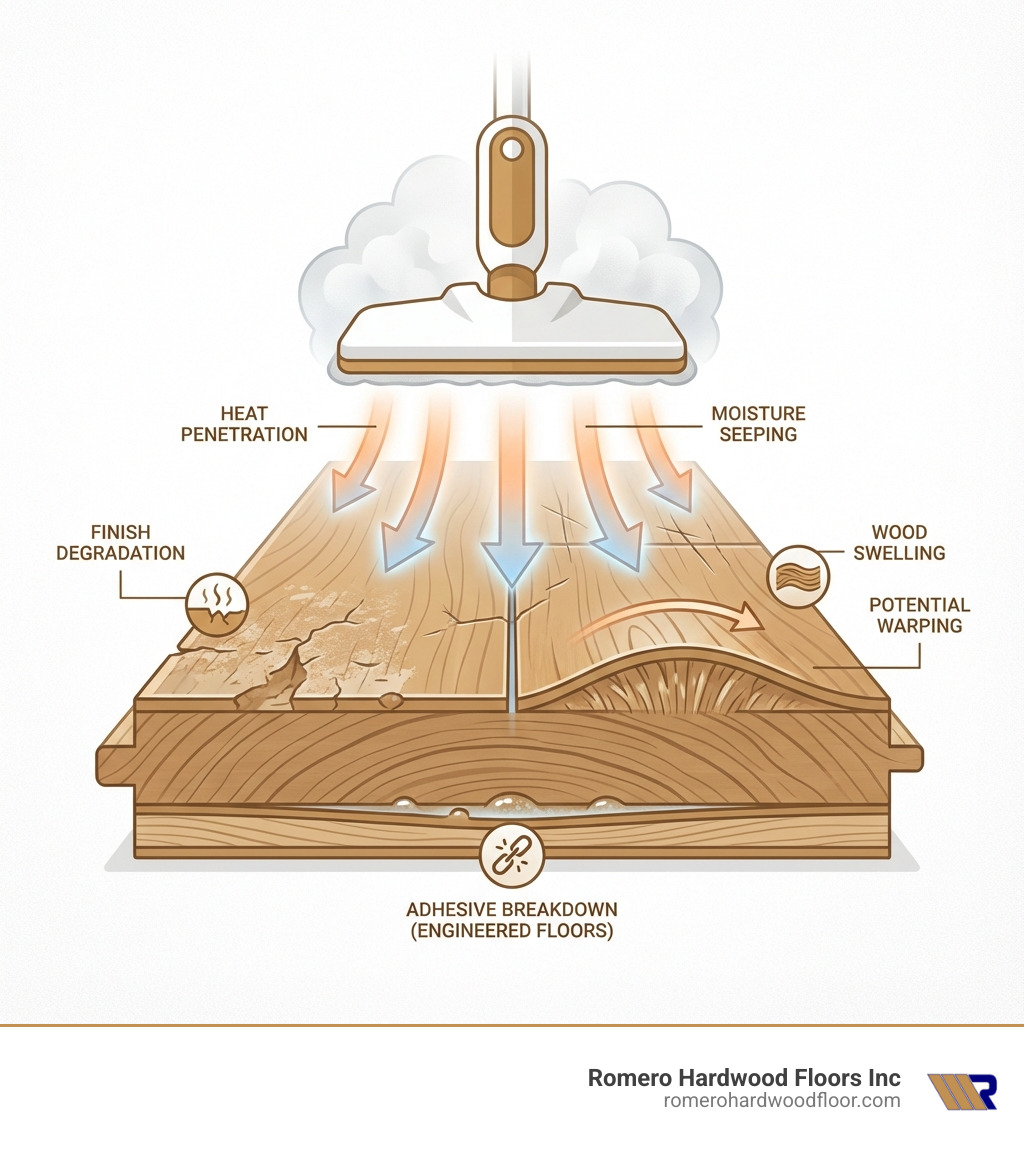
The heat from steam mops is far beyond what timber floors can handle. Most manufacturers recommend floor surface temperatures not exceed 85 to 95 degrees Fahrenheit. When steam at 120-200 degrees Fahrenheit hits your floor, it can cause several issues:
- Finish Degradation: The protective finish on your timber floor (polyurethane, lacquer, etc.) is a thin plastic layer. High heat can soften, blister, or melt this finish, making it less durable and more susceptible to wear.
- Increased Susceptibility to Scratches: A softened finish is a weak finish. Once compromised, your floor will scratch much more easily, losing its luster.
- Breaking Down Adhesives in Engineered Flooring: Engineered hardwood is constructed from multiple layers glued together. The heat and moisture can degrade these adhesives, leading to delamination—where the layers separate. This damage is often irreversible.
The Issue with Excessive Moisture
Beyond heat, the moisture itself is a major problem. While steam mops claim to leave minimal moisture, independent tests have shown that “all the tested models left residual moisture, some more than others.” This is a significant concern:
- Water Penetration: Even on a sealed floor, small gaps, hairline fractures, or tiny scratches can be entry points for moisture. Once water gets beneath the surface, it can be trapped.
- Seeping into Seams and Micro-scratches: Steam vapor can penetrate microscopic imperfections, condensing back into liquid water that attacks wood fibers and adhesives.
- Mold and Mildew Risk: Trapped moisture in a warm environment is an ideal breeding ground for mold and mildew, leading to odors, discoloration, and potential health hazards hidden beneath your floor.
The Risks of Using a Steam Mop on Timber Floors
In communities we serve like Beverly and Chelsea, we’ve repeatedly seen steam mops cause irreversible damage to timber floors. Despite manufacturer claims that their products are “safe for hardwood floors,” the reality is that the combination of heat and moisture is a recipe for ruin. This is particularly true for high-traffic areas, where the floor’s protective finish is often worn down, leaving the wood even more vulnerable.

How Steam Damages Different Timber Floors
Steam damages different timber floors in unique ways, but the outcome is consistently negative:
- Solid Hardwood: Made from a single piece of wood, solid hardwood is highly susceptible to warping, cupping (edges higher than the center), and crowning (center higher than the edges). The rapid moisture absorption causes wood fibers to swell unevenly, leading to these distortions.
- Engineered Wood: These floors have a real wood veneer over a plywood or fiberboard core. Steam’s heat and moisture can weaken the adhesives bonding the layers, causing delamination—the separation of the veneer from the core. This destroys the plank’s structural integrity.
- Laminate Flooring: Often mistaken for wood, laminate has a compressed particleboard core that is highly absorbent. When steam penetrates the seams, the core swells, leading to buckling, lifting, and bubbling. The North American Laminate Flooring Association (NALFA) does not endorse steam cleaning on any laminate flooring.
Sealed vs. Unsealed: The Dangers of Using a Steam Mop on Timber Floors
Many homeowners believe a “sealed” floor is impervious to steam, but this is a dangerous misconception.
- Unsealed/Oiled/Waxed Floors: Using a steam mop on these floors is an immediate disaster. The wood directly absorbs moisture, leading to instant staining, discoloration, and severe swelling, as these finishes offer almost no water barrier.
- Sealed Floors: Even a perfectly sealed floor isn’t safe. The finish isn’t hermetically sealed. Tiny gaps between boards, scratches, or areas with worn finish (common in high-traffic zones) become entry points. Hot steam forces its way into these openings, condenses into water, and causes localized damage.
Long-Term Consequences of Using a Steam Mop on Timber Floors
The damage from a steam mop is often a slow process that accumulates over time, leading to significant consequences:
- Gradual Finish Dulling: The heat and moisture slowly erode the finish’s integrity, leading to a dull, lifeless appearance.
- Hazy or Cloudy Appearance: A common complaint is a persistent cloudy film on the finish, caused by a reaction with the finish or mineral deposits from tap water.
- Premature Need for Refinishing: All these forms of damage accelerate the floor’s aging process. You’ll find yourself needing to refinish your floors much sooner than anticipated, which is a costly and inconvenient process.
- Voiding Your Floor’s Warranty: One of the most critical consequences is voiding your flooring warranty. Most manufacturers include clauses against using steam or excessive water. If damage occurs and a steam mop was used, your claim will likely be denied, leaving you with the full cost of repairs. Our hardwood floor care guide emphasizes following manufacturer guidelines to protect your investment.
What Flooring Experts Recommend
At Romero Hardwood Floors, serving communities like Peabody, Saugus, and Lynnfield, we’ve dedicated ourselves to the art and science of timber flooring. And when it comes to steam mop timber floors, the consensus among professionals like us is crystal clear: avoid them. This isn’t just our opinion; it’s a unified stance from leading industry associations and manufacturers worldwide.
The Official Stance from Industry Associations
The major authorities in the flooring industry have consistently issued strong warnings against using steam mops on timber floors. Their recommendations are based on extensive research and understanding of wood’s properties and the potential for damage.
- National Wood Floor Association (NWFA) Warning: The NWFA is the leading authority for wood flooring. They explicitly state that “using steam or excessive water may damage a wood floor.” This warning is a cornerstone of their maintenance guidelines, which you can explore further in their official resources on wood floor maintenance.
- World Floor Covering Association (WFCA) Advice: The WFCA echoes this sentiment, providing a similar warning against using excessive water when cleaning wood floors. Their guidance for consumers, including advice on before you buy hardwood flooring, consistently prioritizes dry cleaning methods to protect the integrity of the wood.
- North American Laminate Flooring Association (NALFA) Position: For laminate floors, which are particularly susceptible to moisture, the NALFA goes even further. They “do not endorse the use of steam cleaning machines on any laminate flooring,” as detailed in their recommendations for laminate specific cleaning products. This is a critical point for the many homes in our service areas of Stoneham and Wakefield that feature laminate.
These organizations represent the collective wisdom and experience of the entire flooring industry. Their warnings are not arbitrary; they are rooted in the physical realities of how wood reacts to heat and moisture.
Can Using a Steam Mop Void Your Warranty?
This is perhaps one of the most significant financial risks associated with using a steam mop on your timber floors. Most reputable flooring manufacturers craft their warranties with specific care and maintenance guidelines. These often include explicit clauses against “excessive water” or, more directly, the use of “steam” for cleaning.
Imagine this scenario: you’ve invested in beautiful hardwood floors for your Medford home, and a few years down the line, you notice cupping, discoloration, or delamination. You contact the manufacturer, only for them to inquire about your cleaning methods. If they find you’ve been using a steam mop, your warranty claim will almost certainly be denied. This leaves you, the homeowner, responsible for the potentially hefty costs of repair or even full replacement.
Why won’t steam mop manufacturers cover floor damage? Because their warranties typically cover defects in their product, not damage to other products (like your flooring) caused by improper use or incompatibility. They might claim their mop is “safe” for sealed hardwood, but the ultimate responsibility for verifying compatibility with your specific floor’s warranty lies with you. When it comes down to it, the flooring manufacturer’s warranty is the one that truly protects your investment, and they are the experts on their product’s long-term health.
Safe and Effective Alternatives for Cleaning Timber Floors
Now that we’ve thoroughly debunked the myth of steam mop timber floors, let’s pivot to what actually works! Protecting your beautiful timber floor investment in your Somerville or Danvers home doesn’t require harsh chemicals or risky gadgets. It simply requires a consistent routine and the right tools.
The Best Daily and Weekly Cleaning Routine
A little consistent effort goes a long way in keeping your timber floors looking pristine and extending their lifespan. We recommend a simple, multi-step approach:
- Sweep or vacuum with a soft-bristle head daily or every other day: This is your first line of defense against dirt, dust, and abrasive particles that can scratch your floor’s finish. Always use a vacuum specifically designed for hard floors or one with a “hard floor” setting that retracts the beater bar. For broom users, a soft-bristle broom is ideal.
- Immediately wipe up spills: Accidents happen! Whether it’s a spilled drink or a pet mishap, prompt cleanup is crucial. Use a soft, absorbent cloth to blot up the liquid as soon as possible. Never let liquids sit on your timber floor, as even small amounts can eventually penetrate the finish and cause damage.
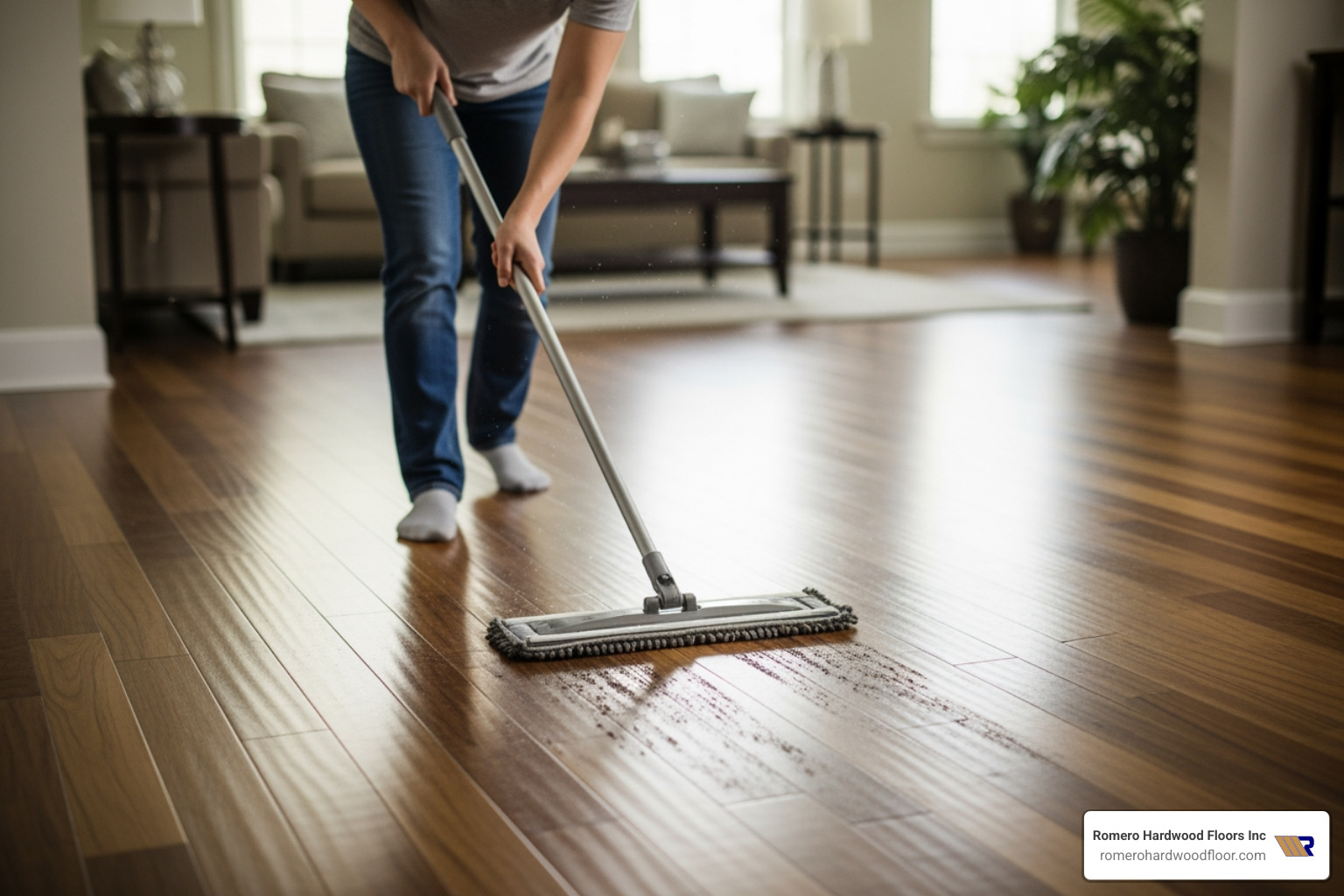
- Use a microfiber dust mop for daily upkeep: For quick touch-ups or between vacuums, a microfiber dust mop is a fantastic tool. It effectively picks up dust, pet hair, and allergens without scratching the surface or introducing moisture.
- Damp-mop (not wet-mop) weekly: This is where we get the deeper clean. The key word here is “damp,” not “wet.” Your mop should be barely moist, never dripping. We recommend a microfiber flat-head mop for this task, as it allows for precise moisture control.
Recommended Cleaning Tools and Products
Choosing the right tools and products is just as important as the routine itself. Here’s what we recommend for homes in Marblehead, Salem, and beyond:
- Microfiber Mops: These are our absolute favorite for timber floors. Microfiber is incredibly effective at trapping dirt and grime with minimal moisture. They’re gentle, washable, and allow you to control the dampness precisely.
- pH-Neutral Hardwood Floor Cleaners: Forget harsh chemicals. A good quality, pH-neutral cleaner is specifically formulated to clean your timber floor without damaging its finish. Always look for products explicitly labeled for hardwood or timber. These cleaners are designed to lift dirt without leaving a residue or stripping the protective layer. You can find excellent options in our guide to hardwood floor cleaning products.
- Avoiding Vinegar and All-Purpose Cleaners: While vinegar is often touted as a natural cleaner, its acidic nature can dull your timber floor’s finish over time. Similarly, all-purpose cleaners are too harsh and can leave streaks or damage the protective layer. Stick to products specifically designed for wood.
- The “Two-Bucket” Mopping Method: For an extra clean approach, use two buckets: one with your pH-neutral cleaning solution and one with clean water for rinsing your mop head. This ensures you’re always applying clean solution to your floor and not just spreading dirty water around.
When to Call for Professional Cleaning
Even with the best routine, timber floors can benefit immensely from professional attention. At Romero Hardwood Floors, we offer specialized services for homes and businesses in East Boston, Nahant, and the surrounding areas.
- Deep-seated dirt and grime: Over time, fine particles can get trapped in the wood grain or micro-scratches, making your floor look dull or perpetually dirty. Our professional equipment and expertise can extract this deep-seated grime without harming your floor.
- Restoring shine to dull floors: If your floors have lost their luster, a professional cleaning can often revitalize their appearance, bringing back their natural beauty.
- Annual deep cleaning benefits: We recommend an annual professional deep clean to maintain the health and longevity of your timber floors. Think of it as a spa day for your floors!
- Preparing a floor for refinishing: If your floors are showing significant wear and tear, or if you’re considering a change in stain, a professional deep clean is an essential first step before sanding and refinishing. For more insights on this, refer to our article on what is best to clean hardwood floors.
Frequently Asked Questions about Steam Mopping Timber Floors
We hear a lot of questions about steam mop timber floors from homeowners in communities like Manchester-by-the-Sea and Reading. It’s understandable; the marketing can be quite persuasive! Let’s tackle some of the most common queries we receive.
Are there any “safe” steam mops or settings for wood floors?
This is a recurring question, often fueled by steam mop manufacturers who claim their latest model has a “hardwood setting” or is “safe for sealed floors.” While some steam mops do offer variable steam settings, including a “low” option, the fundamental problem remains: wood and excessive moisture/heat do not mix.
Even at a low setting, steam is still steam – superheated water vapor. It’s still delivering moisture and heat to your floor’s surface at temperatures far exceeding what flooring manufacturers recommend. The risk, even if slightly reduced, is still present. A “low” steam setting might reduce the immediate visible damage, but the cumulative effect of repeated exposure can still lead to finish degradation, moisture penetration, and long-term issues. We’ve seen that even minimal steam is a gamble not worth taking for your valuable timber floors. The consensus from flooring professionals remains to avoid them entirely.
My steam mop manufacturer says it’s safe for sealed hardwood. Who should I believe?
This is a classic dilemma, isn’t it? You’ve got conflicting advice, and you’re caught in the middle. On one side, the steam mop manufacturer, keen to sell you their product, assures you it’s safe. On the other, the flooring manufacturer, and industry associations, like the NWFA and WFCA, strongly advise against it.
Here’s our straightforward advice: always believe the flooring manufacturer and the industry associations. Why? Because the flooring manufacturer is responsible for the long-term health and warranty of your floor. Their recommendations are designed to protect their product and ensure its longevity. The steam mop manufacturer, while perhaps well-intentioned, is primarily concerned with their appliance. If damage occurs, your flooring warranty will likely take precedence, and as we discussed, it will almost certainly be voided if a steam mop was used.
We’ve seen this play out in homes across Melrose and Swampscott. When damage occurs, the steam mop company is highly unlikely to replace your entire timber floor. The long-term health and beauty of your floor should always be the priority, and that means adhering to the advice of those who know timber floors best.
What if I’ve already used a steam mop on my timber floors?
If you’re reading this and suddenly feeling a pang of panic because you’ve been using a steam mop on your timber floors, don’t despair! The most important first step is to stop immediately. Put that steam mop away and switch to safer cleaning methods.
Next, it’s crucial to assess for damage. Take a close look at your floors, especially in high-traffic areas or where the mop might have lingered. Look for:
- Cupping, crowning, or warping: Are the edges of the boards lifting or the centers bulging?
- Discoloration: Are there any dark spots, especially along seams or in areas of wear?
- Hazy or cloudy finish: Has the once-clear finish developed a dull, cloudy film?
- Peeling or bubbling: Is the finish visibly separating from the wood, or are there any blisters?
Even if you don’t see immediate, obvious damage, we recommend you monitor the floor over time. Sometimes, the effects of moisture can be gradual. Keep an eye on how your floor responds to seasonal humidity changes.
If you notice any of these changes, or if you’re simply concerned about the potential long-term impact, don’t hesitate to consult a professional. At Romero Hardwood Floors, we can inspect your floors and advise on the best course of action, whether it’s minor repair, a deep clean, or even a refinish to restore their beauty. For more tips on maintaining your floors and potentially addressing minor issues, our wooden floor maintenance tips can be a helpful resource.
Conclusion: Protect Your Investment with Proper Care
We’ve journeyed through steam mop timber floors, peeling back the layers of marketing hype to reveal the undeniable truth: while the allure of a chemical-free, easy clean is strong, the combination of steam and wood is unequivocally a recipe for ruin. The high heat and excessive moisture inherent in steam cleaning stand in direct opposition to the natural properties and protective finishes of timber flooring, leading to irreversible damage like warping, delamination, and premature finish degradation.
The verdict is clear, and it’s echoed by industry giants like the National Wood Floor Association and the World Floor Covering Association: steam mops are not safe for timber floors. Their use can, and often will, void your valuable flooring warranty, leaving you with costly repairs or replacements.
Instead of risking your beautiful investment, accept the power of proper care. A consistent routine of sweeping, vacuuming with soft attachments, and damp-mopping with a microfiber mop and pH-neutral cleaner will keep your floors sparkling, hygienic, and long-lasting. And for those times when your floors need a little extra love, or if you suspect damage from past cleaning methods, professional cleaning and restoration services are always the safest and most effective solution.
At Romero Hardwood Floors, we are passionate about helping homeowners in Revere, MA, and surrounding communities like Beverly, Chelsea, Danvers, East Boston, Gloucester, Lynnfield, Malden, Manchester by the Sea, Marblehead, Medford, Melrose, Nahant, Peabody, Reading, Rockport, Salem, Saugus, Somerville, Stoneham, Swampscott, Wakefield, Winchester, Winthrop, and Woburn, protect and preserve their timber flooring. Don’t let a well-intentioned cleaning shortcut turn into a costly mistake.
For expert advice on maintaining, restoring, or cleaning your floors, trust the professionals at Romero Hardwood Floors. Learn more about our professional floor care solutions today, and let us help ensure your timber floors remain a source of pride for years to come.
