
Why Proper Hardwood Floor Cleaning Matters
How to mop hardwood is one of the most common questions homeowners ask after installing beautiful wood floors. Here’s the quick answer:
Quick Steps to Mop Hardwood Floors:
- Sweep or vacuum first to remove all loose dirt and debris
- Use a damp microfiber mop (not soaking wet) with pH-neutral hardwood cleaner
- Wring out excess water until the mop is barely damp
- Mop in the direction of the wood grain using gentle strokes
- Work in small sections and dry each area immediately
- Never leave standing water on your floors
Your hardwood floors go through a lot. Day in and day out, they handle falling food, pet hair, foot traffic, and spills. Without proper cleaning techniques, dirt acts like sandpaper on your floor’s protective finish, slowly wearing it away. Research shows that professional hardwood floor cleaning can remove an average of 96% of common household allergens from your floors, but daily maintenance with the right mopping technique is what keeps them looking pristine between deep cleans.
The biggest mistake homeowners make? Using too much water. Standing water and wood are never a good combination. Water can seep into seams, causing warping, cupping, or permanent damage to your investment. That’s why knowing how to mop hardwood correctly is essential for protecting your floors and making them last a lifetime.
Many homeowners also damage their floors by using the wrong cleaning products. Items like vinegar, Murphy’s Oil Soap, or steam mops might seem harmless, but they can dull your finish, leave residue buildup, or even void your manufacturer’s warranty. The key is understanding your floor’s finish type and using appropriate products that won’t interfere with the protective polyurethane layer.
I’m Francisco Romero, owner of Romero Hardwood Floors Inc., and I’ve been answering the question “How to mop hardwood?” for customers daily since 2006. With over 15 years of experience installing and maintaining hardwood floors throughout the Revere, MA area, I’ve seen what works and what causes expensive damage.
Essential Tools and Preparation for Wood Floors
Before we even think about touching the floor with a mop, we have to talk about preparation. If you skip this part, you’re essentially just moving wet dirt around your house—which is about as effective as trying to clean a window with a muddy sponge. In our experience serving homes from Beverly to Winthrop, we’ve found that the “dry” phase of cleaning is actually the most important for longevity.
The “Dry Clean” Phase
The first rule of how to mop hardwood is: never mop a dusty floor. Dust and grit are abrasive. If you drag a damp mop over them, you’re creating a fine sandpaper slurry that will micro-scratch your polyurethane finish over time.
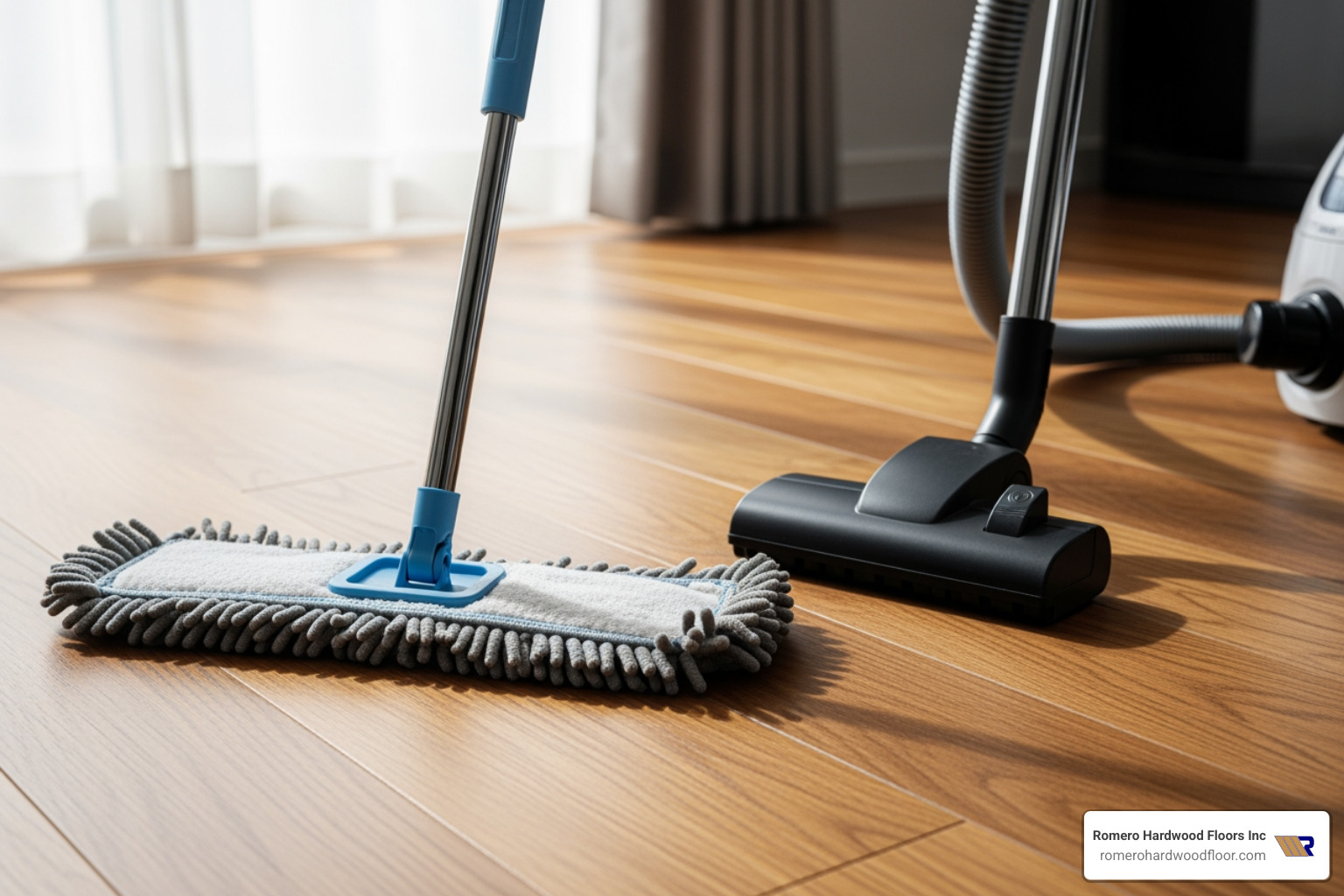
You should start with a high-quality broom or, better yet, a microfiber dust mop. Microfiber is a game-changer because it uses static electricity to actually “grab” the dust rather than just pushing it into the corners. If you prefer mechanical help, a vacuum cleaner is excellent, provided it has a “hard floor” setting. This setting is crucial because it deactivates the beater bar (the rotating brush). A spinning beater bar is designed for carpets; on hardwood, it can leave unsightly swirl marks or even chip the finish.
Your Essential Cleaning Kit
To do the job right, you’ll need a specific set of Hardwood Floor Cleaning Products. Here is what we recommend keeping in your utility closet:
- Microfiber Flat Mop: These are superior to old-school string mops because they allow for precise moisture control.
- pH-Neutral Cleaner: Look for products specifically labeled for hardwood. Avoid anything that promises a “glow” or “shine,” as these often contain waxes that build up into a sticky mess.
- Two Buckets (Optional but recommended): One for your cleaning solution and one with plain water for rinsing your mop head.
- Microfiber Cloths: For spot-treating stubborn stains by hand.
The Ultimate Step-by-Step Guide: How to mop hardwood?
Now that the floor is free of loose debris, it’s time for the main event. If you’re nervous about damaging your floors, don’t be! As long as you follow these Hardwood Floors Cleaning Tips, your floors will be perfectly safe.
Step 1: Dilute and Prep
If you aren’t using a ready-to-use spray, mix your hardwood floor cleaner with lukewarm water according to the manufacturer’s instructions. Do not “eyeball” it—too much soap leaves a dulling residue, while too little won’t break down the oils from footsteps or spilled food.
Step 2: The Dampness Test
This is the most critical part of learning how to mop hardwood. Dip your flat mop into the solution and wring it out until it is barely damp. If you squeeze the mop and a single drop of water falls out, it’s still too wet. The floor should dry within a minute or two of mopping. If it’s staying wet longer than that, you’re using too much water.
Step 3: Mop with the Grain
Always mop in the same direction as the wood planks. This allows the cleaning solution to get into the micro-grooves between boards and ensures that any drying lines follow the natural pattern of the wood, making them invisible.
Step 4: Work in Sections
Don’t try to mop the whole living room at once. Work in 3×3 foot sections. This prevents you from “trapping” yourself in a corner and ensures you can dry each section if necessary. If you encounter a stubborn spot, use a microfiber cloth and a little extra pressure rather than soaking the area with more water.
Step 5: The Final Dry
Even with a well-wrung mop, we always suggest following up with a dry microfiber pad or a soft towel. This “buffing” step removes any remaining moisture and prevents streaks, leaving that professional-looking finish we love to see in our projects across Salem and Marblehead.
Damp Mopping vs. Wet Mopping: Why it Matters
| Feature | Damp Mopping (Correct) | Wet Mopping (Incorrect) |
|---|---|---|
| Water Amount | Barely moist to the touch | Dripping or pooling |
| Drying Time | 1-2 minutes | 5+ minutes |
| Risk | Minimal; safe for sealed wood | High; causes warping and cupping |
| Tool | Microfiber flat mop | String mop and heavy bucket |
Safe Solutions and Common Mistakes to Avoid
In DIY cleaning, there is a lot of bad advice floating around. We often see homeowners in towns like Saugus and Lynnfield trying to save a few dollars by using “natural” remedies that actually end up costing them thousands in floor repairs.
The Vinegar Myth
Many people believe vinegar is a “miracle” cleaner. While it’s great for windows, it’s an acid. Over time, the acidity of vinegar will eat away at your hardwood floor’s finish, leaving it looking dull and lifeless. Once the finish is gone, the wood is vulnerable to water damage and stains. Similarly, avoid bleach-based products unless they are specifically formulated for wood and used for extreme disinfection—and even then, proceed with caution.
The Danger of Steam
We get asked about this a lot: Best Steam Cleaner for Wood Floors. Our professional advice? Be extremely careful. Steam is forced moisture and heat. If your floor has any tiny gaps or the seal is slightly worn, that steam will drive moisture deep into the wood fibers. This can cause “cupping,” where the edges of the boards rise higher than the center. Most flooring manufacturers will actually void your warranty if they find out you used a steam mop.
All-Purpose Cleaners
You might wonder, “Can I Use All-Purpose Cleaner on Wood Floor?” The answer is usually no. All-purpose cleaners often contain harsh chemicals or surfactants that leave a sticky film. This film acts like a magnet for dirt, making your floors get dirty even faster. Instead, stick to eco-friendly, pH-neutral options or follow our Wood Floor Cleaner Ultimate Guide for safer alternatives.
Common Mistakes Summary:
- Using a Beater Bar: Scratches the surface.
- Standing Water: Causes wood to swell and warp.
- Oil Soaps: Leave a residue that makes it impossible to “screen and coat” your floors later without a full sanding.
- Furniture Polish: Makes floors dangerously slippery and leaves a gummy buildup.
Professional Maintenance and Average Costs
Even with the best weekly mopping routine, hardwood floors eventually need professional attention. Over years of use, microscopic scratches and deep-seated grime can make the floors look tired. This is where professional deep cleaning and refinishing come in.
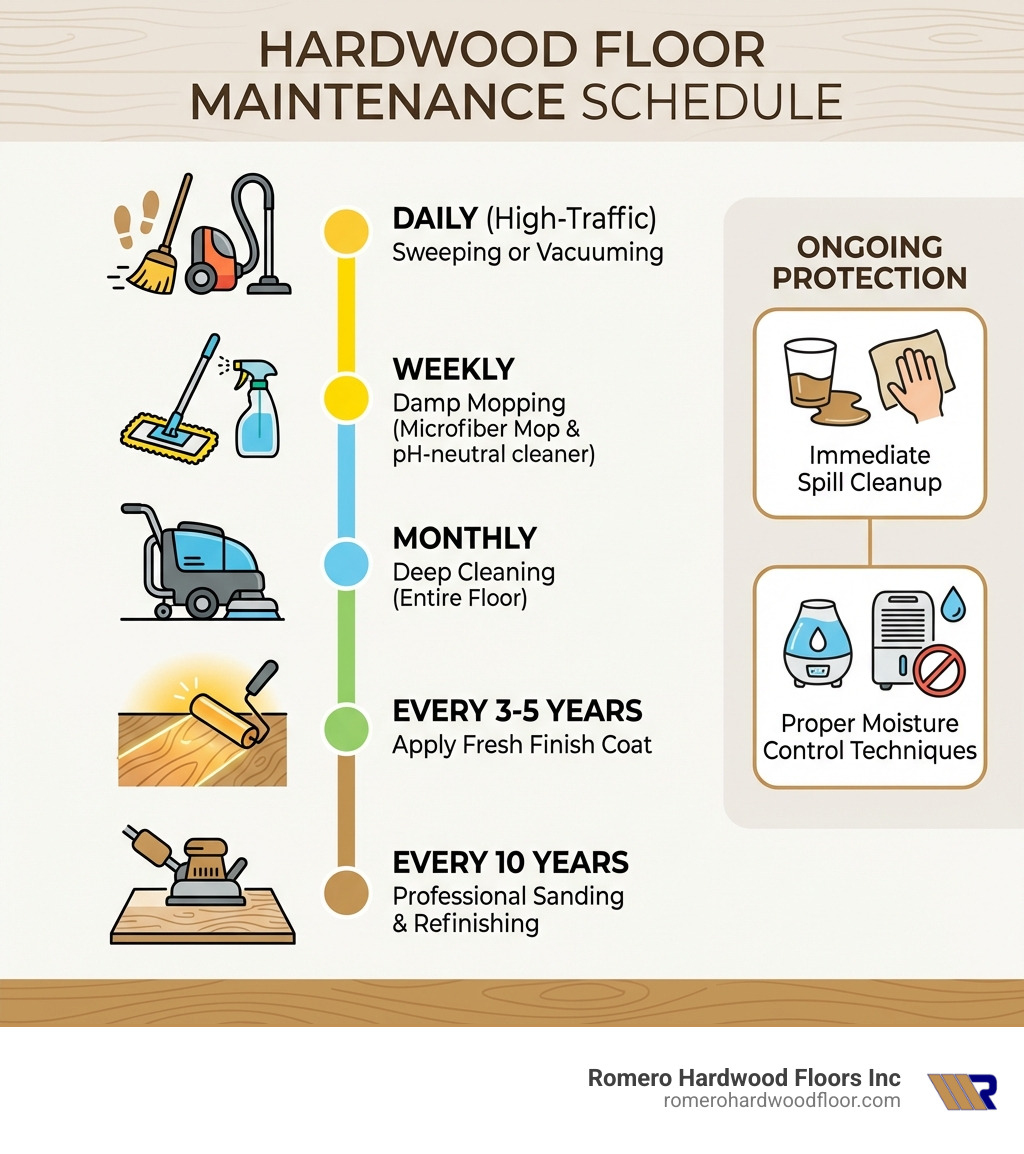
For our neighbors in Medford, Melrose, and the surrounding North Shore area, we recommend a professional deep clean once a year, especially if you have pets or kids. This process involves industrial-strength (but floor-safe) scrubbers that extract dirt from the grain that a regular mop simply can’t reach.
When to Polish vs. Refinish
If your floors are just a bit dull but don’t have deep scratches, you might just need a wood floor polish or a “screen and coat.” This is where we lightly abrade the top layer of the finish and apply a fresh coat of polyurethane. If the wood itself is damaged, stained, or the finish has worn through to the bare timber, a full sand and refinish is required.
Average Professional Service Costs Note: These are average costs based on internet data and are not actual costs for Romero Hardwood Floors. For a specific quote in our service area, please contact us.
| Service | Average Cost Per Sq. Ft. | Wide Range (Low to High) |
|---|---|---|
| Professional Deep Cleaning | $1.25 | $0.50 – $4.00 |
| Screen and Coat (Buffing) | $2.00 | $1.00 – $7.00 |
| Full Sand and Refinish | $5.50 | $3.00 – $17.00 |
Frequently Asked Questions
How often should I use the “How to mop hardwood?” technique?
The frequency depends entirely on the “lifestyle” of your home. In high-traffic areas like kitchens and entryways, we recommend a dry sweep or dust mop daily. For damp mopping, once every two weeks is usually sufficient for most homes. If you have pets that track in mud or small children who spend a lot of time on the floor, you might move that up to once a week. Over-mopping can be just as bad as under-mopping, as it increases the floor’s exposure to moisture.
Is it safe to use vinegar when I learn how to mop hardwood?
As we mentioned earlier, we strongly advise against it. Even if you use the Best Cordless Mop for Hardwood Floors, the chemical reaction of the acid in vinegar can break down the protective seal of your polyurethane. This not only dulls the look but can also void your manufacturer’s warranty. Stick to pH-neutral cleaners to keep your protection intact.
How do I protect my floors from scratches and dents?
Prevention is the best medicine!
- The 8,000 PSI Rule: Did you know a person in high heels can exert over 8,000 pounds of pressure per square inch? That’s enough to dent concrete, let alone oak or pine. Implement a “no shoes” policy.
- The First Line of Defense: Place a high-quality door mat at every entrance to catch grit before it enters your home.
- Area Rugs: Use rugs in high-traffic zones like hallways.
- Felt Pads: This is non-negotiable. Every chair, table, and sofa leg should have a felt pad.
- Pet Pedicures: Keep your dog’s nails trimmed. If you can hear them “clicking” on the floor, they are long enough to scratch the finish.
Conclusion
Learning how to mop hardwood isn’t just about keeping things clean—it’s about protecting one of the most valuable investments in your home. At Romero Hardwood Floors Inc., we take pride in helping our clients in Revere, Chelsea, East Boston, and throughout the North Shore maintain floors that stay beautiful for decades.
Whether you’re looking for a new installation to increase your property value or you need expert advice on restoring your current floors, we’re here to help. Our commitment to punctuality and guaranteed workmanship has made us a local favorite since 2006.
Ready to take your floor care to the next level? You can order the supplies you need online, or Get your comprehensive hardwood floor care guide here for even more expert tips. A little bit of the right care goes a long way in keeping your “lava” floors looking like a dream!
