
The Beauty of a Second Chance
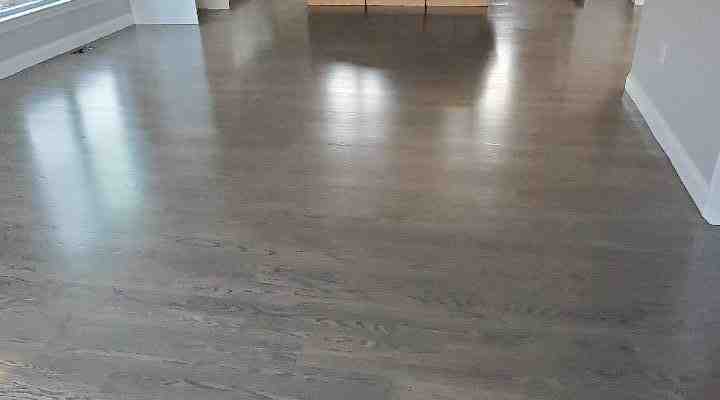
Engineered hardwood that can be refinished offers a valuable opportunity to restore a floor’s beauty without the cost of replacement. However, not all engineered floors have this potential.
Quick Answer: Can Your Engineered Hardwood Be Refinished?
It depends on the wear layer thickness:
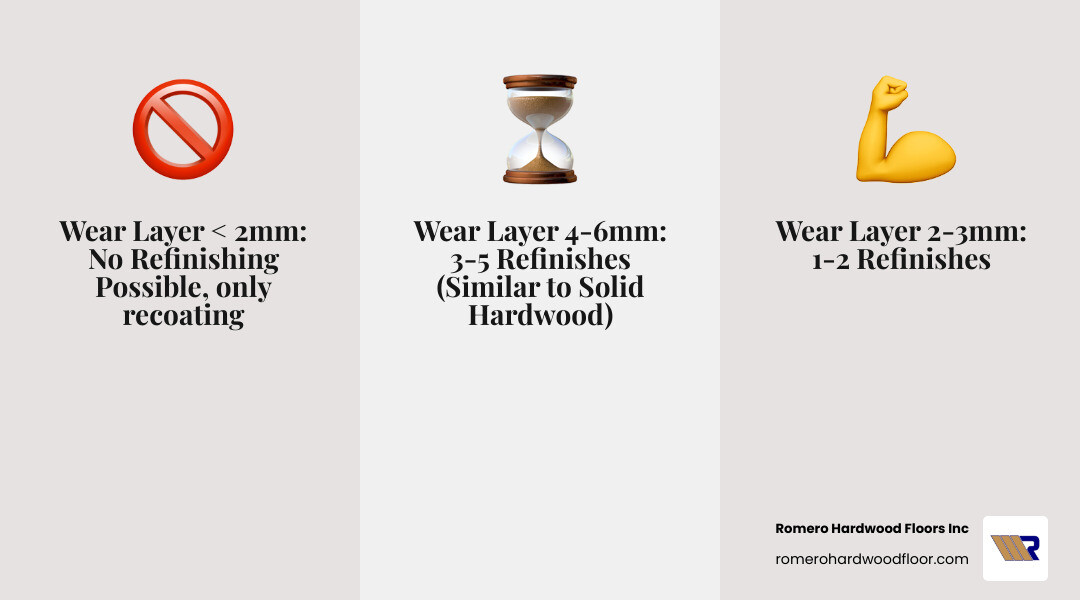
- Less than 2mm (1/16″): Cannot be refinished, only recoated
- 2-3mm (1/8″): Can be refinished 1-2 times
- 4-6mm (3/16″-1/4″): Can be refinished 3-5 times, similar to solid hardwood
Key Factor: Each refinish removes approximately 0.75-1mm of surface material, so thicker wear layers allow for more refinishing opportunities over the floor’s lifetime.
Many homeowners see their floors fade from scratches and wear, wondering if restoration is possible. The good news is that engineered hardwood can be refinished, but its construction dictates the process. Unlike solid hardwood, engineered flooring has a thin top layer of real wood (the wear layer) bonded to a core of plywood or HDF. This design offers superior stability and moisture resistance but limits refinishing.
The catch is that you can only sand as deep as the wear layer. Sanding too far exposes the core and ruins the floor, making it critical to understand your floor’s construction. The ability to refinish extends the floor’s lifespan, protects your investment, and maintains home value. A thick wear layer (4mm+) can be refinished up to 5 times, similar to solid hardwood, while medium layers (2-4mm) allow for 1-2 refinishes.
I’m Francisco Romero, owner of Romero Hardwood Floors Inc. For over 15 years, I’ve helped homeowners in Revere, MA, restore engineered hardwood they thought was beyond saving. Understanding your floor’s refinishing potential is the first step to making an informed decision.
Key terms for engineered hardwood that can be refinished:
Decoding Your Floor: Can It Be Refinished?
Before diving into refinishing, you must understand your floor’s construction. The thickness of the top hardwood layer determines how many times, if any, you can sand and restore it.

Understanding Engineered Hardwood Construction
Engineered hardwood is composed of multiple cross-ply layers for strength and stability. At the top is the hardwood veneer (wear layer), which is the visible wood species like oak or walnut. Beneath are core layers of plywood or High-Density Fiberboard (HDF), cross-laminated to increase stability and resist warping from humidity changes. A backing layer adds final stability. This construction allows installation in areas unsuitable for solid hardwood, like basements. For more details, see our guide on engineered hardwood flooring.
The Critical Component: The Wear Layer and Why It Matters
The wear layer‘s thickness, ranging from 0.5mm to 6mm, determines your floor’s refinishing potential, durability, and protection. A thicker layer allows for more sanding and offers greater resilience against scratches and dents. The wood species also affects hardness; Oak and Hickory are harder than Birch or Walnut. You can learn more about wood properties from industry resources like the Hardwood Information Center. Investing in a thicker wear layer ensures longevity, especially in high-traffic areas.
How Many Times Can You Refinish? A Thickness Guide
The ability to refinish engineered hardwood that can be refinished depends almost entirely on the wear layer’s thickness. Our experience shows a clear correlation:
- Thin Veneers (less than 2mm): These floors (0.5mm-1mm wear layer) are generally not recommended for sanding. They might tolerate a light screening and recoating, but the risk of sanding through the veneer is too high.
- Medium Wear Layers (2mm to 3mm): A 2mm layer can typically be sanded 1 to 2 times, while a 3mm layer may allow for 2 to 3 refinishes.
- Thick Wear Layers (4mm to 6mm): These floors can be sanded 3 to 6 times, similar to solid wood, significantly extending their lifespan.
Each refinishing removes about 0.75 to 1mm of the surface, which is why a thicker wear layer is vital. Always assess the thickness before starting a project; a professional can help if you’re unsure.
The Complete Guide to Refinishing Engineered Hardwood
Once you’ve confirmed your engineered hardwood that can be refinished has a sufficient wear layer, you can begin the restoration process. This involves careful preparation, precise sanding, and skilled application of new finishes.

Step 1: Preparation and Assessment for Refinishing
Proper preparation is key to a successful refinishing project, especially with a delicate wear layer.
- Room Preparation: Completely clear the room of all furniture, rugs, and decor. Cover vents and seal doorways with plastic sheeting to contain dust.
- Cleaning the Floor: Thoroughly sweep or vacuum the floor, then clean it with a pH-neutral hardwood floor cleaner. The floor must be completely dry before you begin.
- Repairing Imperfections: Fill minor nail holes or gouges with a matching wood filler. For more significant issues, consult our hardwood floor repair techniques. Ensure all repairs are dry and smooth.
- Assessing Wear Layer Thickness: Re-confirm your wear layer’s thickness. Check manufacturer specifications or inspect a cross-section in a hidden area like a floor vent. This confirms your floor is truly engineered hardwood that can be refinished.
Step 2: The Art of Sanding Engineered Hardwood that can be Refinished
Sanding engineered hardwood requires precision to avoid damaging the thin wear layer.
- Orbital Sander vs. Drum Sander: We strongly recommend a lightweight orbital sander over an aggressive drum sander. An orbital sander offers more control, reducing the risk of sanding through the veneer. Use a handheld orbital or edge sander for corners.
- Sanding with the Grain: Always sand in the direction of the wood grain to prevent visible scratches. Move at a steady pace with consistent, overlapping passes.
- Sandpaper Grit Progression: Start with a fine 100-120 grit sandpaper to lightly scuff the finish. Avoid coarse grits unless absolutely necessary. You can progress to finer grits (150-180) for a smoother finish.
- Dust Control: Use a sander with a dust collection system and vacuum thoroughly between passes to prevent dust from scratching the wood.
This task often benefits from professional expertise. Our professional floor sanding services ensure the job is done right.
Step 3: Staining and Applying a New Durable Finish
This final step protects the wood and defines its look.
- Stain Testing: Always test your chosen stain in an inconspicuous area first, as wood absorbs stain differently.
- Application Techniques: Apply stain evenly in small sections, wiping off excess. Apply finish in thin, even coats, avoiding puddles.
- Drying Times: Strictly follow the manufacturer’s recommended drying times for stain and finish to avoid a tacky or cloudy result.
- Finish Types: Water-based finishes dry quickly with low VOCs and a clear look. Oil-based finishes offer great durability and a rich, amber tone.
- Number of Coats: Apply two to three thin coats of a quality polyurethane finish for durability. Lightly buff between coats for better adhesion.
- Curing Time: The finish needs to cure completely, which can take 24 to 72 hours or more. Avoid heavy traffic, furniture, and rugs until the floor is fully cured.
For a flawless result, see our guide to finishing hardwood floors.
Alternatives and Special Considerations
Sometimes, a full refinish isn’t the best option. Perhaps the wear layer is too thin, or the finish just needs a refresh. Thankfully, there are alternative methods for certain types of floors.
Refinishing vs. Screening/Recoating: What’s the Difference?
If your floors are tired but don’t have deep scratches, screening and recoating (a “buff and coat”) is a less invasive, cost-effective alternative to a full refinish.
| Feature | Refinishing (Sanding and Refinishing) | Screening/Recoating (Buff and Coat) |
|---|---|---|
| Process | Sands down the top wood layer to remove deep damage before applying new stain and finish. | Lightly abrades (screens) the existing finish before applying new top coats. No wood is removed. |
| Purpose | Restores floors with deep scratches, gouges, or discoloration. Allows for color change. | Refreshes dull floors with minor surface wear. Adds a new protective layer. |
| Wear Layer Impact | Removes 0.75-1mm of wood. | Removes no wood. |
| Cost | Higher. | Lower. |
| Time | Longer process. | Shorter process. |
| Longevity | Provides many years of renewed life. | Extends the current finish’s life for a few years. |
Screening is excellent for floors with thin wear layers (under 2mm) or to delay a full sanding. For those looking to change their floor’s hue without sanding, glazing techniques offer an effective way to alter the color by applying a tinted polyurethane finish.
Refinishing Challenges: Factory-Applied and Hand-Scraped Floors
Some engineered floors present unique refinishing challenges.
- Factory-Applied Finishes: Modern floors often have extremely durable factory finishes with aluminum oxide. While great for longevity, they are tough to sand and increase the risk of damaging a thin wear layer. Extreme caution and the right equipment are necessary.
- Hand-Scraped and Distressed Floors: These floors have intentional textures for a rustic look. Aggressive sanding will erase this character. To preserve the look, consider a light screening and recoating or hire a skilled professional who can sand carefully. Learn more about these unique surfaces in our information on hand-scraped floors.
Always communicate your expectations with a flooring professional to find the best approach for your specific floor.
When to Replace Instead of Refinish Your Engineered Hardwood
Sometimes, replacement is the more sensible long-term solution. Here’s when to consider it:
- Sanding Through the Veneer: If the plywood or HDF core is exposed, the floor cannot be refinished.
- Extensive Water Damage: Widespread swelling, buckling, or delamination of the layers means the floor is structurally compromised and beyond repair.
- Deep Gouges and Damage: If damage is deeper than the amount of wood that can be safely sanded off, the imperfections will remain.
- Very Thin Wear Layer: For floors with a wear layer under 2mm, replacement is often a more realistic option than a risky refinishing attempt.
- Cost-Benefit Analysis: If the cost of repairs plus a limited-use refinish approaches the cost of a new floor, replacement may offer better long-term value.
If you face these issues, our team specializes in engineered hardwood flooring installation and can help you choose a durable, stylish replacement.
Frequently Asked Questions about Refinishing Engineered Hardwood
We get a lot of questions about engineered hardwood that can be refinished. Here are some of the most common inquiries we receive:
Is it cheaper to refinish or replace engineered hardwood floors?
Refinishing is often cheaper, if your floor is a good candidate.
- Average Refinishing Costs: National averages for refinishing range from $2 to $8 per square foot.
- Average Replacement Costs: Replacement, including materials and installation, can range from $6 to $15 per square foot or more.
Please note: All prices mentioned are national averages based on internet data and do not reflect the specific pricing of Romero Hardwood Floors. Costs can range from $2-$15 per square foot depending on the project’s complexity and location. For a detailed breakdown, see our guide on the cost to sand and refinish hardwood floors.
While refinishing is cheaper upfront, consider the long-term value. If a thin wear layer only allows for one refinish, replacement might be more cost-effective over time.
What are the signs my engineered hardwood is too thin to refinish?
Here are the key signs your floor’s wear layer may be too thin for sanding:
- Check Specifications: Find the original manufacturer’s specs for wear layer thickness.
- Use a Floor Vent: Remove a vent cover and measure the top wood layer’s thickness with a ruler or coin.
- Previous Refinishing: If the floor has been sanded before, it has less material remaining.
- Visible Core Material: If you can see plywood or HDF layers at the edges of planks, the wear layer is compromised.
- Splintering: Excessive flaking or splintering indicates the top layer is too thin and brittle for sanding.
When in doubt, consult a professional for an accurate assessment.
How do I maintain my newly refinished floors?
Proper maintenance is key to preserving your newly refinished floors.
- Allow for Curing: Wait for the finish to fully cure (typically 24-72 hours) before placing furniture or rugs.
- Gentle Cleaning: Use a damp mop with a pH-neutral hardwood cleaner. Avoid excessive water.
- Use Felt Pads: Place felt pads under all furniture legs to prevent scratches.
- Protect High-Traffic Areas: Use area rugs in entryways and other busy zones.
- Avoid Harsh Chemicals: Never use abrasive cleaners, wax, or steam mops, which can damage the finish.
- Sweep or Vacuum Regularly: Remove abrasive dirt and grit with a soft brush or vacuum attachment.
For more advice, explore our wooden floor maintenance tips. Proactive care will extend the life and beauty of your floor.
Your Floor’s Future: Making the Right Choice
Deciding whether to refinish or replace your engineered hardwood is a significant choice. While DIY can be tempting, the delicate nature of the wear layer makes professional expertise invaluable.
- DIY Risks: A single misstep with a sander can cut through the veneer, ruining the floor and forcing a costly replacement.
- Professional Expertise: With over 15 years of experience, the team at Romero Hardwood Floors Inc. has the specialized equipment and skill to assess your floor and execute the job flawlessly. We understand the nuances of engineered wood and guarantee our workmanship.
- Value of Professional Assessment: We provide honest assessments to guide you toward the most cost-effective and beautiful solution. Our goal is to improve your property’s value and ensure your floors last for years.
If you’re in Revere, MA, or our surrounding service areas—including Beverly, Chelsea, Danvers, Gloucester, Lynnfield, Malden, Manchester by the Sea, Marblehead, Medford, Melrose, Nahant, Peabody, Reading, Salem, Saugus, Somerville, Stoneham, Swampscott, Wakefield, Winchester, Woburn, and Winthrop—we can help. Don’t leave your floor’s future to chance. Find hardwood floor refinishing near me and consult the experts to open up your floor’s full potential.
