Refinishing American Cherry Floors: 5 Flawless
Breathing New Life into American Cherry Floors
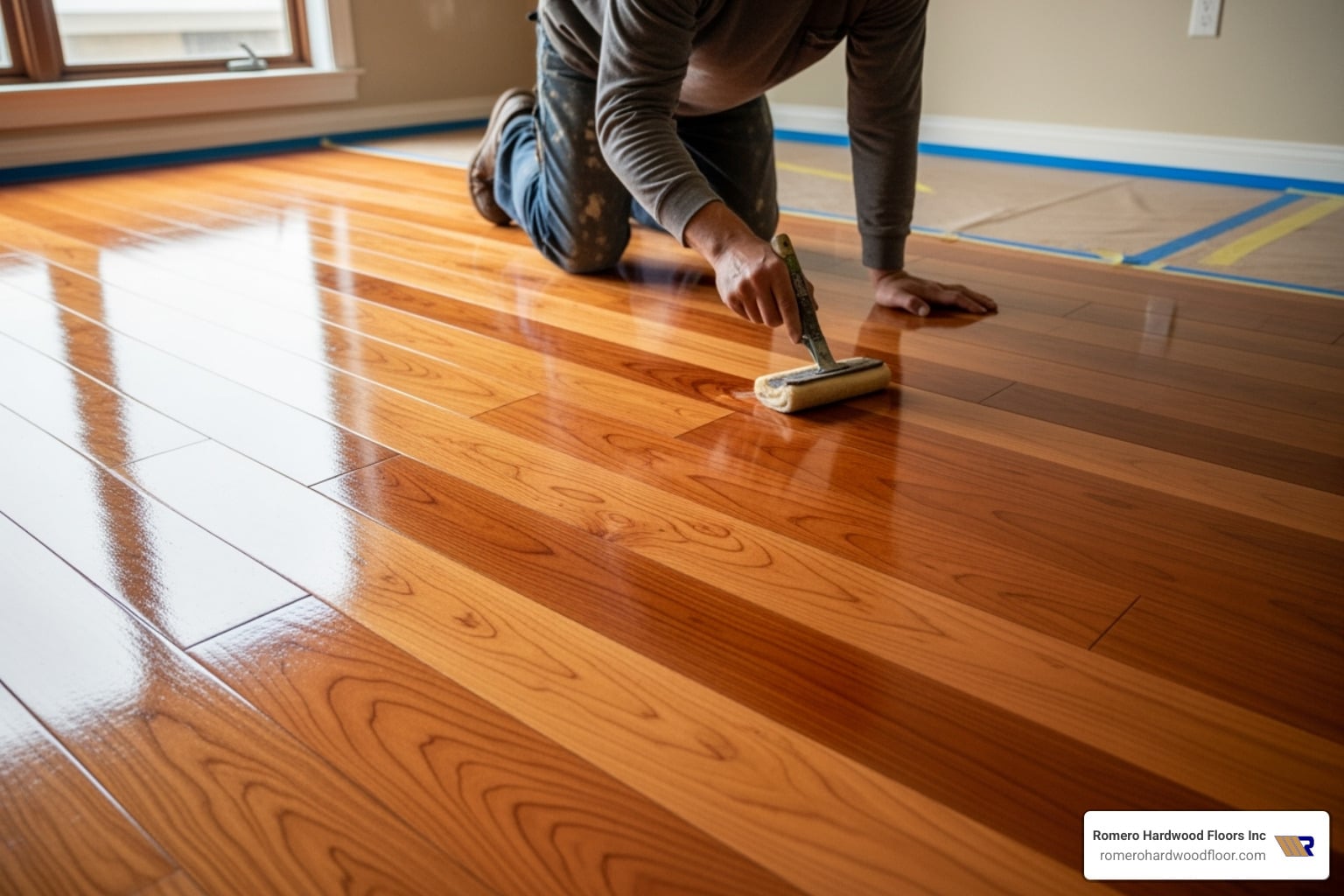
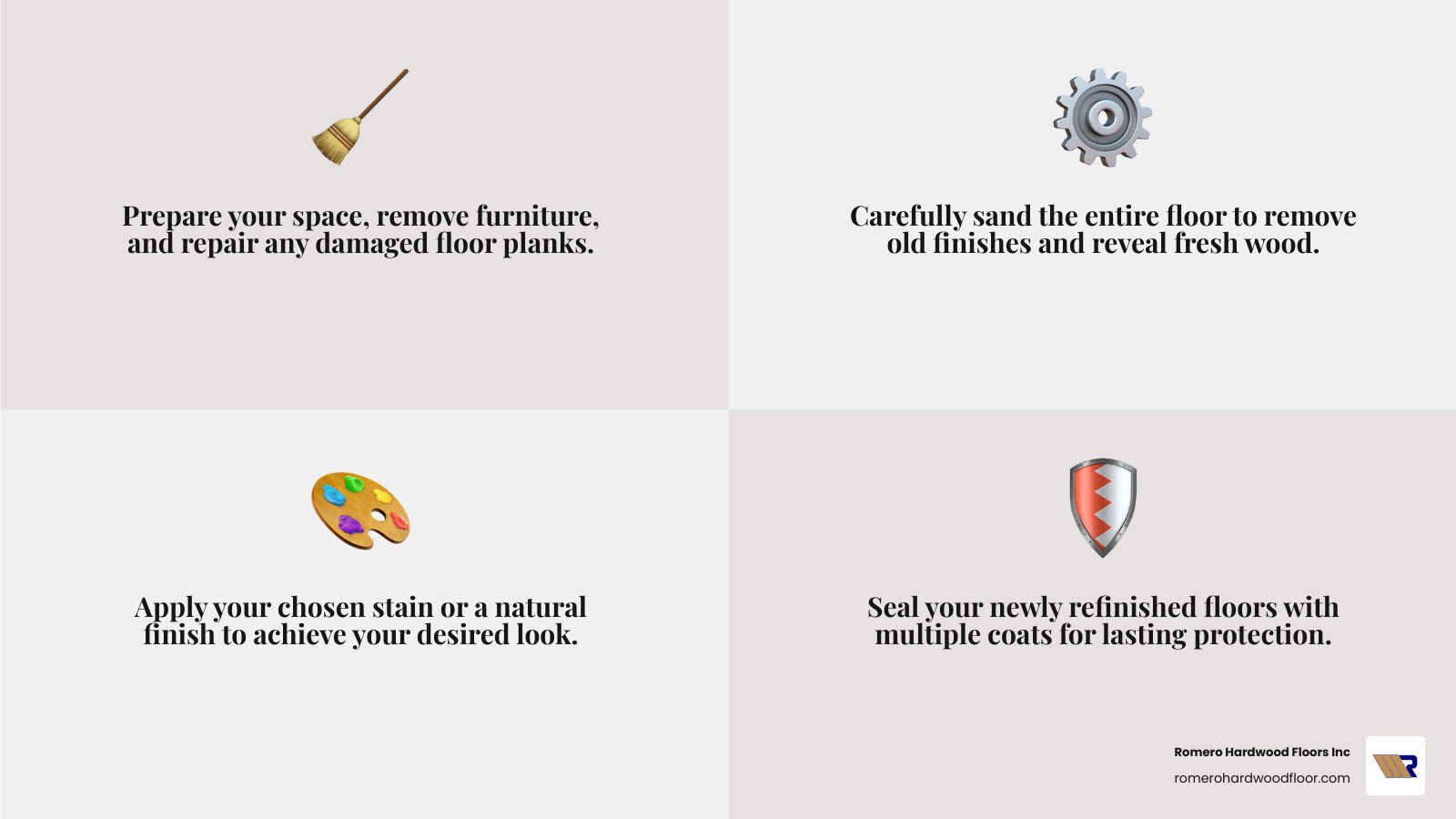
Starting on refinishing american cherry floors can transform your home, bringing out the timeless beauty of this unique wood. Whether your floors are showing their age, have become scratched, or you simply want to update their look, here’s a quick overview of the essential steps:
- Prepare & Repair: Get your room ready, remove furniture, and fix any damaged planks.
- Sanding: Carefully sand the entire floor to remove old finishes and reveal fresh wood.
- Apply Finish/Stain: Choose your desired look and apply stain or a natural finish.
- Seal & Protect: Apply multiple coats of sealant to protect your newly refinished floors.
Did you know American cherry hardwood floors can change color significantly over time due to UV light exposure? They can shift from a pale red to a deep red, or even black. Refinishing removes this aged layer, returning the wood to its original pale red hue. It’s an exciting process that breathes new life into your living space.
As Francisco Romero, owner of Romero Hardwood Floors Inc., I’ve spent over 15 years mastering the art of refinishing american cherry floors and other hardwood surfaces. My team and I are dedicated to delivering outstanding results that improve the beauty and value of your home.
Simple guide to refinishing american cherry floors terms:
Understanding American Cherry Wood Before You Start
American cherry is a remarkable hardwood, renowned for its distinctive grain and ability to transform over time. It is highly photosensitive, meaning its color changes significantly with UV light exposure. New cherry often has a pale, salmon-pink hue, which matures into a rich, deep red or medium brown over the years. This aging process also improves its chatoyance, a subtle 3D shimmer.
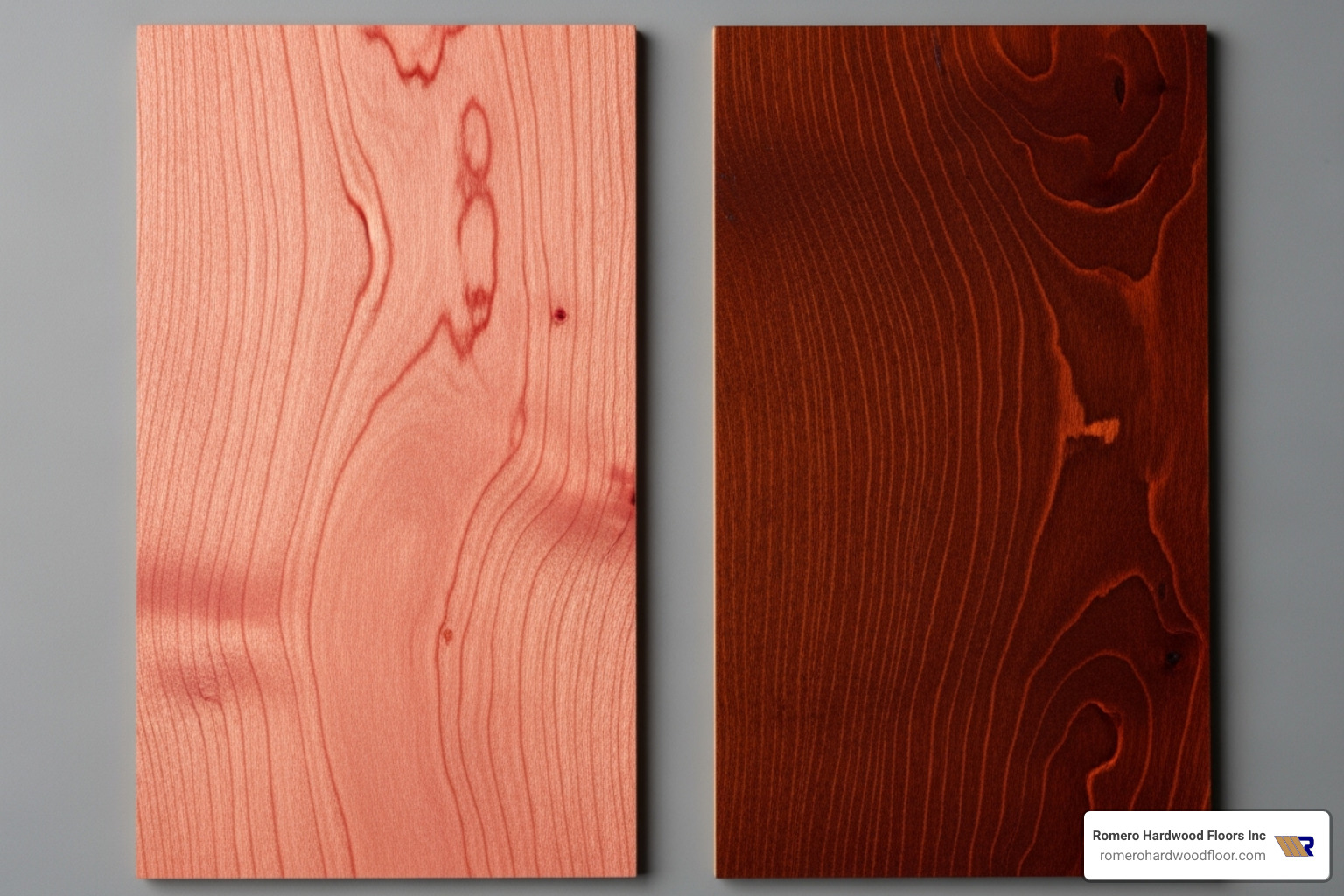
When refinishing american cherry floors, sanding removes this UV-affected top layer, revealing the original, lighter wood. The natural aging and darkening process will then begin anew.
While durable, American cherry is softer than some hardwoods, and its irregular grain structure presents challenges. This unevenness can cause stain to absorb inconsistently, leading to a common issue known as blotching. Older floors, especially from homes built in the early 1900s, may have additional quirks like uneven or warped planks, requiring a custom approach to achieve a smooth finish.
Key Challenges of Refinishing American Cherry Floors
Refinishing cherry floors, particularly older ones, requires careful attention. Common issues include:
- Unevenness: Older floors can be unlevel, with cupped or warped planks that make sanding difficult. A standard drum sander may not follow these contours, risking gouges.
- Repairs: Decades of use can lead to cracks or chipped edges that must be repaired before refinishing for a seamless result.
- Sanding Imperfections: The wood’s relative softness can make it susceptible to chatter marks (rhythmic indentations from the sander) or sanding marks if the technique is not precise.
- Stain Blotching: As mentioned, the irregular grain can absorb stain unevenly, creating a splotchy appearance if not managed with proper conditioning and application techniques. We have refined our methods to address these complexities. You can find More info about floor repair services on our website.
The Impact of UV Light on Color
American cherry’s interaction with UV light is its most fascinating trait. After sanding, the floor returns to its original pale red color. Over the next 10 to 15 years, this will gradually shift to a deeper red and eventually a medium brown, developing the beautiful chatoyance effect that is a hallmark of aged cherry.
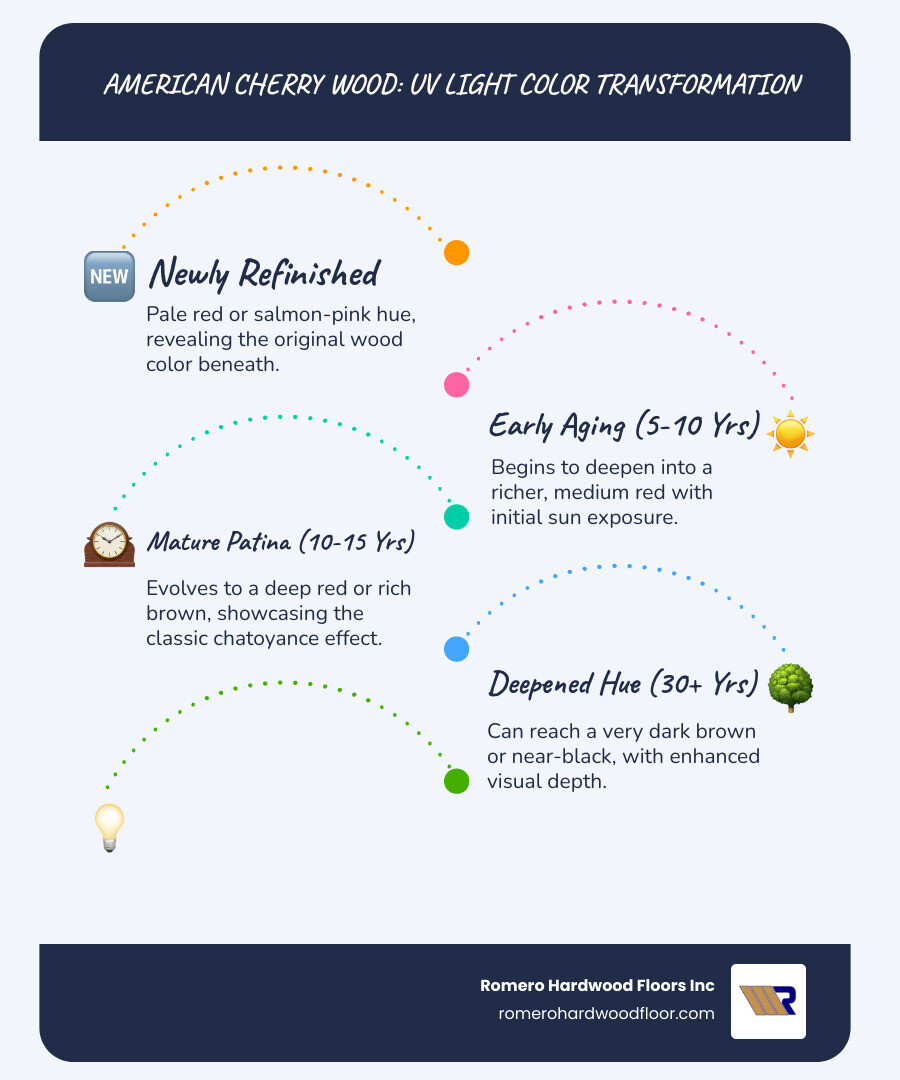
While this natural darkening is often desired, it can be slowed. Adding UV protectors to the finish can help mitigate the effects of sun exposure, giving you more control over the floor’s evolving color. For more details on how we approach this, check out More info about our refinishing process.
The Step-by-Step Guide to Refinishing American Cherry Floors
Refinishing American cherry floors is a rewarding process that brings them back to life. It involves careful room preparation, proper sanding, expert finishing, and protective sealing. Let’s walk through the essential steps.
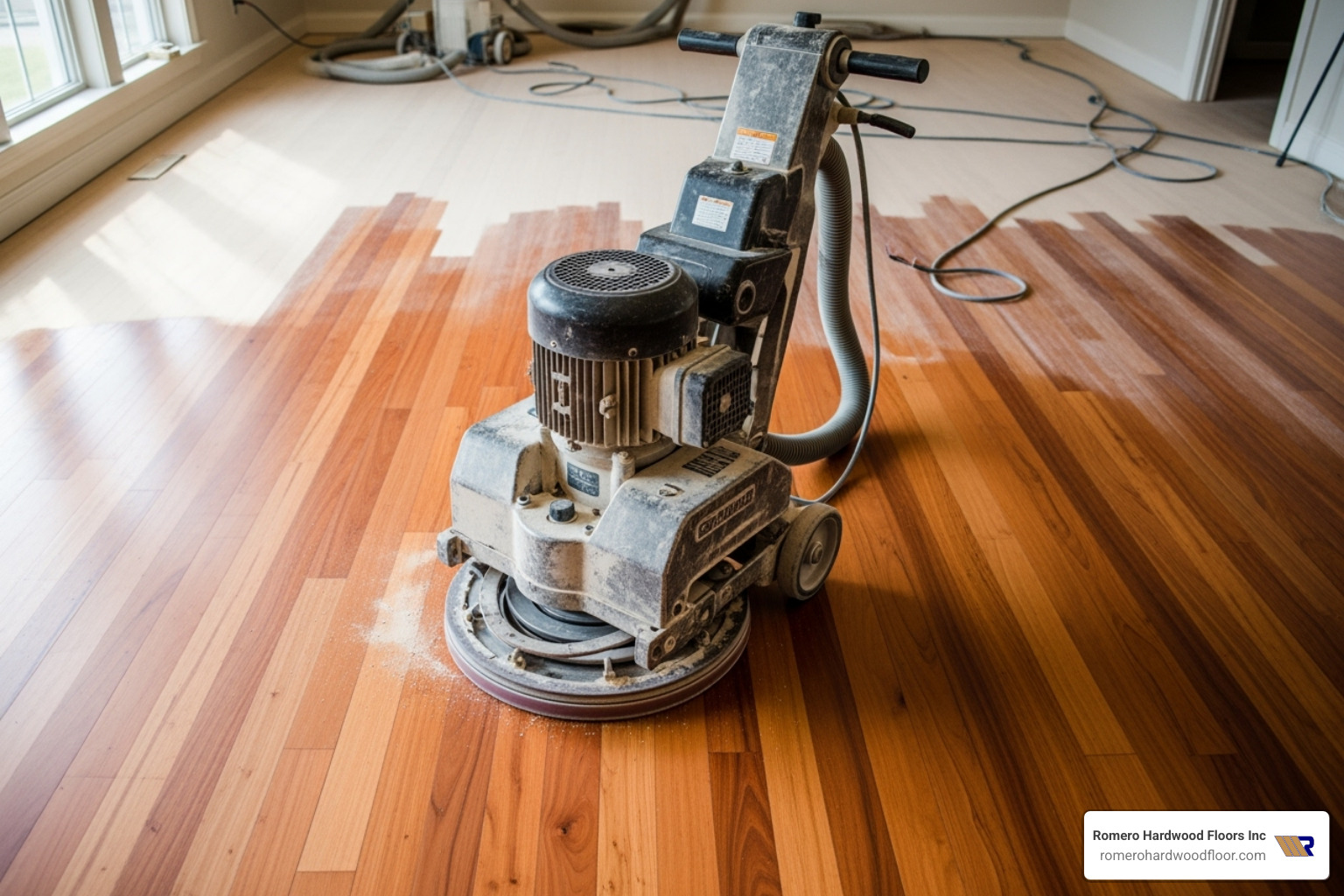
Step 1: Preparation and Repairs
Thorough preparation is the foundation for a successful refinishing project. First, remove all furniture, rugs, and other items from the room. To prevent dust from spreading, seal doorways, vents, and outlets with plastic sheeting. Always wear safety gear, including a dust mask and safety goggles.
Next, inspect the floor. Check for any exposed nails or staples and set them below the wood’s surface to avoid damaging the sanding equipment. For older planks, a metal detector can help find hidden metal.
Repairing damaged planks is a critical step. Small cracks can be filled with a mix of epoxy and fine cherry sawdust for a color-matched filler. For larger damage, it’s often best to cut out the damaged section and install a new piece of cherry wood. If using new or reclaimed wood, allow it to acclimate to your home’s humidity for several days before installation to prevent future warping. Our expertise in More info about hardwood floor installation is invaluable here. Once repairs are complete, a thorough vacuuming creates a clean slate for sanding.
Step 2: Sanding for a Flawless Surface
Sanding is the most transformative step, removing the old finish and revealing fresh wood. Using the right tools and technique is crucial.
Professional-grade equipment is a must. Orbital sanders offer great control, especially on uneven floors, while an edge sander is needed for areas near walls and corners. The key to a smooth surface is using the correct grit sequence. We typically start with a coarse grit, like 36 or 60, to remove the old finish, then progress to finer grits like 80 and 100 or 120. It is vital to keep the sander moving constantly to prevent gouges.
Between each grit, clean the floor thoroughly with a shop vacuum to remove all dust, which could scratch the wood during the next sanding pass. To avoid “chatter marks” (rhythmic dents), we ensure our equipment is perfectly maintained. After the final sanding pass, we vacuum again and then use a tack cloth to pick up the finest dust particles, ensuring a perfectly clean surface for the finish.
Step 3: Applying Your Chosen Finish or Stain
With the floor perfectly sanded, it’s time to apply your chosen finish or stain.
If you decide to stain your cherry floors, preventing blotchiness is key. We strongly recommend using a pre-stain wood conditioner to help the wood absorb stain more evenly. When applying the stain, work in small sections and wipe off any excess stain quickly, usually within a few minutes, to prevent dark spots. For a deeper color, it’s better to apply multiple thin coats rather than one thick one. Gel stains or dyes can also offer more control and a more even color on cherry.
For those who prefer the natural beauty of American cherry, a clear, natural finish application is an excellent choice, allowing the wood’s color to deepen and shimmer as it ages. A technique called “water-popping” (lightly misting the floor with water) can be used before staining or finishing to open the wood grain for more even absorption. For more insights, explore More info about floor staining.
Step 4: Sealing and Protecting Your Investment
The final step is applying a protective sealant to improve the wood’s beauty and shield it from wear, moisture, and sun damage.
Polyurethane is the most common choice, available in two main types:
- Water-based polyurethane: This popular option has low odor, dries quickly, and is easy to clean up. Non-ambering water-based finishes are ideal for keeping cherry’s natural color lighter, as they don’t add a yellow tint.
- Oil-based polyurethane: Known for its durability, this finish imparts a warm, amber glow that deepens over time and can improve the red tones of cherry.
We always apply multiple thin coats (at least three) for the best protection. Between each coat, we allow for proper drying time, then gently buff the floor with a fine-grit screen and clean it with a tack cloth. This ensures a smooth surface and proper adhesion for the next coat.
To slow the natural darkening from sun exposure, UV protector additives can be added to the final coats. Proper curing time after the final coat is essential. While you can walk on the floor in socks in 24-48 hours, the finish needs a week or more to fully harden. Placing furniture or rugs too soon can damage the finish. Patience ensures your beautiful floors last for years. See our results at See examples of our work.
Modern Finishing Options for American Cherry
While the deep red tones of American cherry are classic, today’s interior design trends often lean towards lighter, more neutral, and even gray colors. This shift is about creating bright, open spaces with a fresh, modern feel.

This means that when refinishing american cherry floors, you have more choices than ever to update their look, whether you want to accept their natural charm or completely transform them.
Natural vs. Stained: Pros and Cons
Deciding whether to keep your floors natural or add a stain is a major choice. Each path has unique benefits.
| Feature | Natural Finish (Clear Coat) | Oil-Based Stain | Water-Based Stain |
|---|---|---|---|
| Appearance | Improves natural color, allows darkening & chatoyance. | Deepens color, adds warmth, can emphasize grain. | Wide range of colors, including grays/whites; can be less ambering. |
| Durability | Depends on finish type (polyurethane, etc.). | Good durability, often improves wood’s natural resilience. | Good durability, especially with high-quality polyurethane topcoat. |
| Blotch Risk | None (no pigment applied). | High, due to cherry’s irregular grain; requires pre-conditioner and careful application. | High, due to cherry’s irregular grain; requires pre-conditioner and careful application. |
| Maintenance | Easy to maintain with regular cleaning. | Easy to maintain, can be buffed to restore luster. | Easy to maintain, less prone to yellowing. |
Choosing a Natural Finish: A clear coat celebrates the wood’s unique grain and allows its color to naturally deepen into rich reds and browns, developing its signature chatoyance. To keep the initial pale red look longer, a non-ambering water-based finish is an excellent choice.
Opting for a Stained Finish: Staining opens up a world of custom looks, from deepening the natural red tones to shifting towards modern grays. However, staining cherry requires skill to avoid blotching. Using a pre-stain conditioner is essential, as is even application and quick removal of excess stain.
How to Achieve a Modern Gray or Neutral Look
Changing red-toned cherry to a lighter, neutral, or gray style is a challenging but rewarding process that many professionals avoid. With the right methods, it is absolutely possible.
The most effective way to remove the red is through wood bleaching. This process typically uses a two-part A-B bleach (often oxalic acid and hydrogen peroxide) to strip the natural color from the wood fibers. Due to the strong chemicals, this is a job that requires professional expertise and safety precautions.
The process involves careful application, monitoring, and neutralizing the wood with a mild vinegar solution to stop the chemical reaction. Once bleached, the wood is much lighter. To achieve a true gray or neutral look and prevent red tones from eventually reappearing, we then apply a white, gray, or beige stain. For example, a double bleach process followed by a white oil finish can create a beautiful light brown with white highlights.
Specialized whitening additives can also be added to water-based finishes to improve a white or Nordic look. Creating samples on a matching piece of cherry wood is crucial to ensure the color is perfect before applying it to the entire floor.
Frequently Asked Questions about Refinishing American Cherry
We get many questions about refinishing american cherry floors. It’s a beautiful wood with unique characteristics. Here are answers to the most common inquiries.
How do you prevent blotching when staining cherry wood?
Blotching occurs because cherry’s irregular grain absorbs stain unevenly. To prevent it, we use a few key techniques:
- Use a pre-stain wood conditioner. This evens out the wood’s porosity for a more uniform stain application.
- Apply and wipe off stain quickly. Work in small sections and remove excess stain promptly to prevent it from soaking in too deeply in some spots.
- Consider gel stains or dyes. Gel stains sit more on the surface, while dyes penetrate more evenly than traditional pigment stains, both of which can reduce blotchiness.
Can I make my red cherry floors lighter without bleaching?
Yes. The most direct way is through sanding, which removes the darker, UV-aged top layer and reveals the wood’s original, lighter salmon-pink color.
To preserve this lighter shade, choose a clear, non-ambering water-based finish. These finishes are designed to stay clear and won’t add the yellow or amber tint that oil-based products do over time. While it won’t eliminate the red entirely, stains with white or gray pigments can also be used to create a lighter, more neutral appearance, but be sure to use a pre-conditioner.
How long until I can walk on my newly refinished floors?
Patience is key for a durable finish. The drying and curing process has a few important milestones:
- Walking in socks: You can generally walk on the floor in socks within 24 to 48 hours.
- Furniture: Wait at least 4 days before moving furniture back. Always lift items, don’t slide them, and use felt protectors under all legs.
- Area Rugs: Wait a full week or more before placing area rugs. This allows the finish to fully cure and harden. Putting a rug down too soon can trap moisture and damage the floor.
- Pets: Keep pets with claws off the floor for at least 4 full days to prevent scratches on the still-soft finish.
Get a Professional Finish for Your American Cherry Floors
Refinishing american cherry floors is an art that can dramatically transform your home. While DIY is an option, the unique and temperamental nature of cherry wood makes professional expertise a wise investment. One mistake with sanding depth or stain application can be costly and time-consuming to fix.
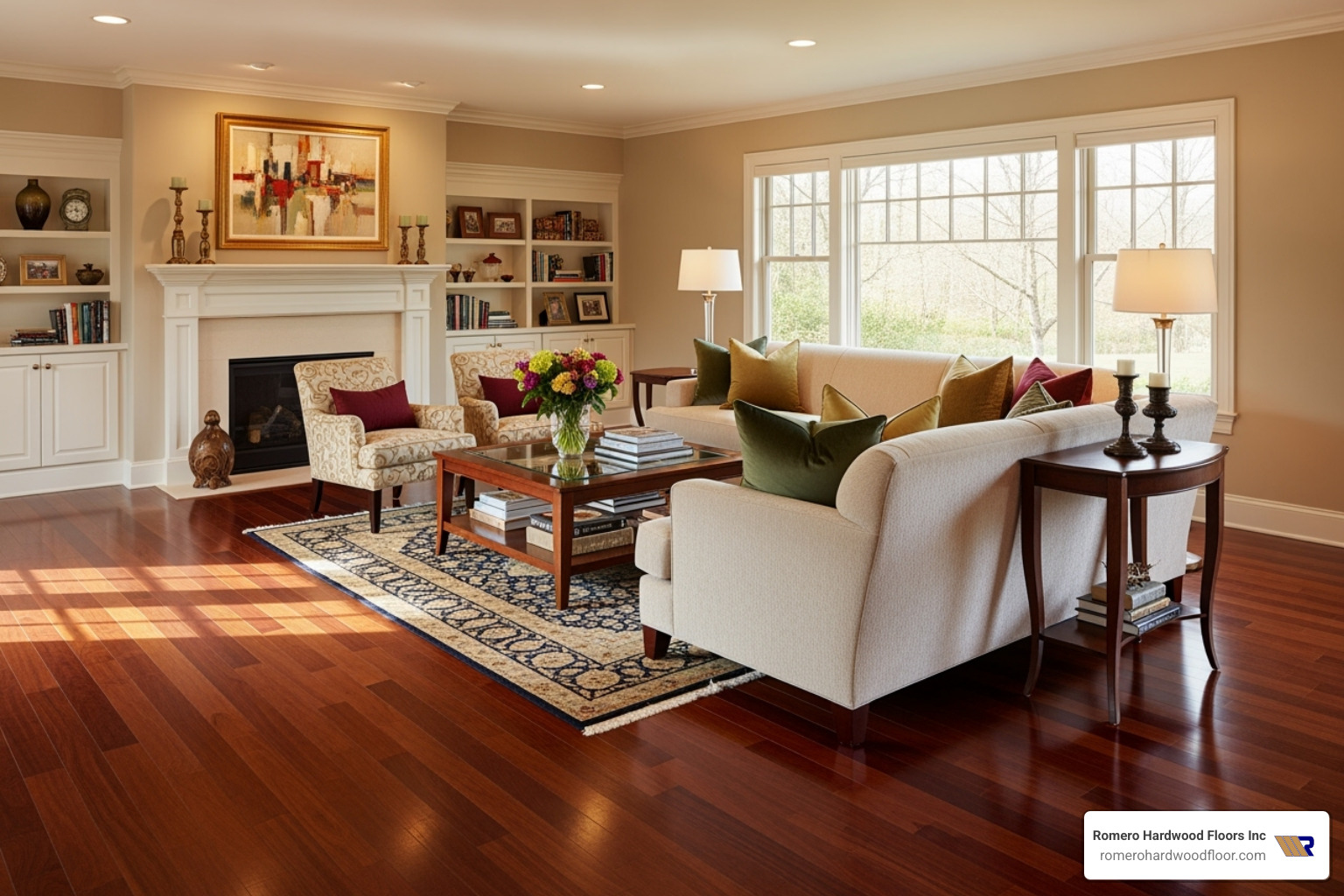
At Romero Hardwood Floors Inc., we have been perfecting the craft of refinishing american cherry floors since 2006. Our team has the experience and specialized equipment to handle every challenge, from preventing blotching to achieving the stunning modern gray finishes that homeowners love today.
We are committed to quality, reliability, and competitive pricing. We show up on time, work efficiently to minimize disruption, and stand behind every project with our guarantee. We are proud to serve homeowners throughout the greater Boston area, including Beverly, Chelsea, Danvers, East Boston, Gloucester, Lynnfield, Malden, Manchester by the Sea, Marblehead, Medford, Melrose, Nahant, Peabody, Reading, Revere, Rockport, Salem, Saugus, Somerville, Stoneham, Swampscott, Wakefield, Winchester, Winthrop, and Woburn.
Choosing a professional refinisher is an investment in your property’s long-term value and durability. Let us create a floor that makes you smile every time you walk through the door.
Ready to fall in love with your floors again? Request an estimate for your project today, and let’s discuss how we can bring your vision to life!
Like us on Facebook!