
In Depth Guide to Choosing Hardwood Floor Underlayment
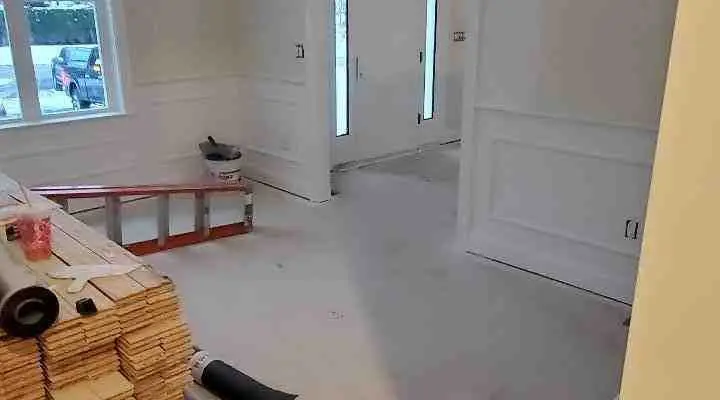
The Unsung Hero Beneath Your Feet
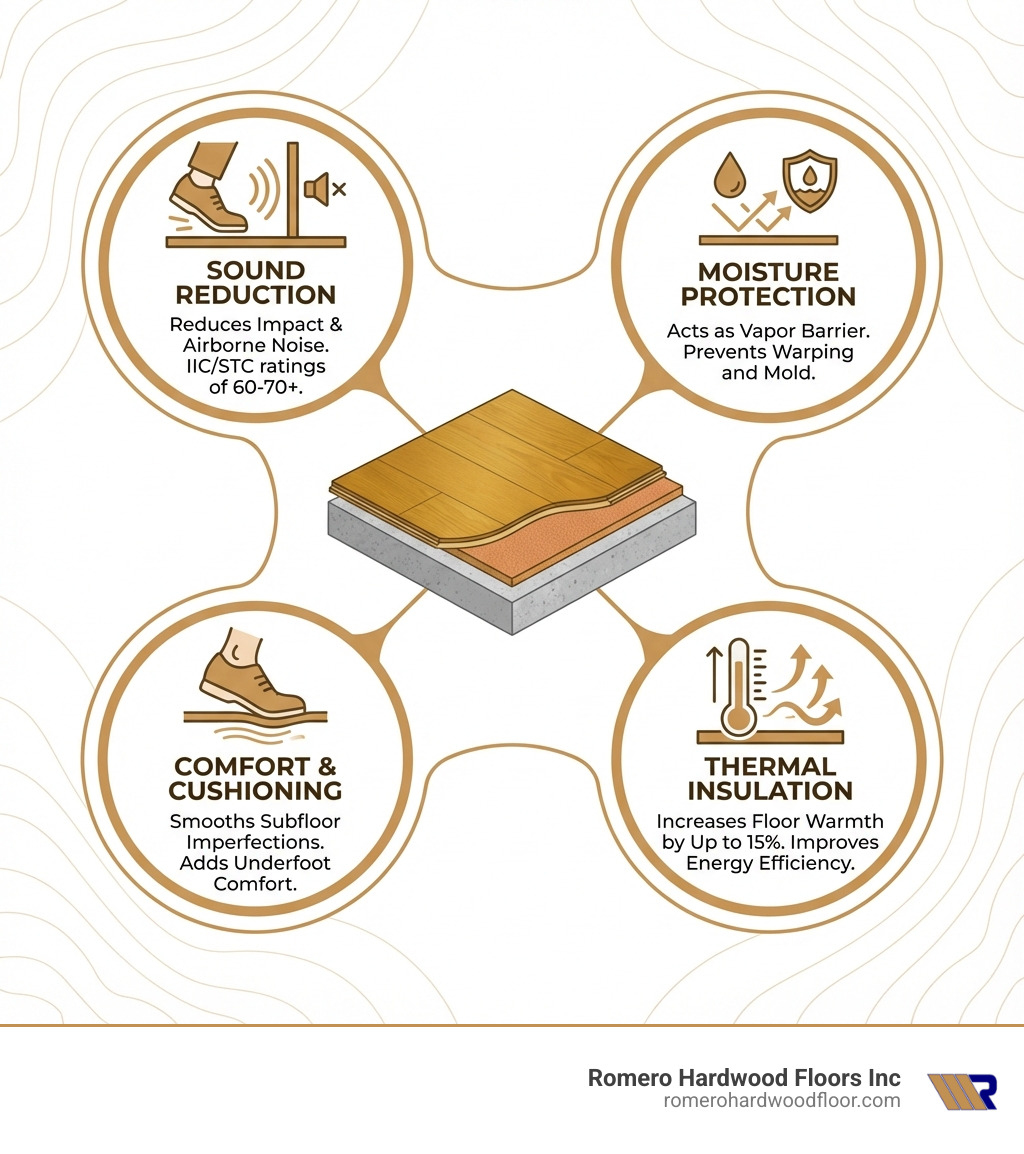
Hardwood Floor Underlayment is a thin protective layer installed between your subfloor and hardwood flooring that provides critical benefits for your floor’s performance and longevity. Here’s what you need to know:
Key Benefits of Hardwood Floor Underlayment:
- Moisture Protection – Acts as a vapor barrier, especially crucial over concrete subfloors
- Sound Reduction – Dampens footstep noise and impact sounds between floors
- Floor Cushioning – Adds comfort underfoot and helps smooth minor subfloor imperfections
- Thermal Insulation – Can increase your floor’s warmth by up to 15%
Main Types: Felt (traditional, for nail-down), Foam (versatile, floating floors), Cork (eco-friendly, excellent sound control), and Rubber (premium performance)
It’s easy to focus on the beauty of the hardwood planks themselves—the rich grain, the warm tones, the timeless elegance. But beneath those beautiful boards lies a hidden hero that many homeowners overlook: underlayment.
This thin layer might seem insignificant, but it plays a massive role in how your floors perform. Without proper underlayment, even the most expensive hardwood can develop squeaks, suffer moisture damage, or transmit every footstep throughout your home. As one flooring expert put it, “Quality underlayment is what separates a good floor from a great one that lasts decades.”
Think of underlayment as the foundation for your flooring investment. It protects against moisture seeping up from concrete slabs, reduces the drumming sound of footsteps in multi-story homes, and adds a layer of comfort that makes your floors feel softer and warmer underfoot. For more foundational information on hardwood installation, check out our New Hardwood Floors Complete Guide.
I’m Francisco Romero, owner of Romero Hardwood Floors Inc., and in my 15+ years installing hardwood floors throughout Massachusetts, I’ve seen how the right Hardwood Floor Underlayment can make or break a flooring project—and I’ve helped countless homeowners avoid costly mistakes by choosing the right materials for their specific needs. In this guide, I’ll walk you through everything you need to know to make the best choice for your project.
Why Underlayment is Essential for Your Hardwood Floors
Imagine your beautiful hardwood floors installed without any protective layer underneath. Over time, you might notice persistent squeaks, cold spots, or even warping and buckling. This is where hardwood floor underlayment steps in as your floor’s best friend. It’s not just an optional extra; it’s a crucial component that improves the durability, comfort, and longevity of your hardwood.
Underlayment serves multiple vital functions: it offers robust moisture protection, significantly reduces sound transmission, provides thermal insulation, and adds a layer of cushioning that makes walking on your floors a dream. It also helps to smooth out minor imperfections in the subfloor, creating a more stable and even surface for your hardwood planks. For a deeper dive into the overall advantages of hardwood, explore our Hardwood Flooring Advantages Guide. We always recommend consulting industry standards for best practices in flooring.
The Critical Role of Moisture Protection
One of the most important functions of hardwood floor underlayment is moisture protection. Hardwood is a natural material that can be sensitive to changes in humidity and direct moisture. Moisture from a subfloor, especially concrete, can lead to significant problems like warping, cupping, and even mold and mildew growth. Nobody wants that!
Concrete subfloors, common in many homes and commercial properties across Revere, MA, and surrounding areas, are notorious for wicking moisture up from the ground. This is why a vapor barrier is absolutely essential when installing hardwood over concrete. We always perform moisture testing on concrete slabs before installation. Acceptable moisture levels for concrete subfloors are typically below 3 pounds per 1,000 square feet per 24 hours.
A dedicated 6-mil polyethylene film or an underlayment with an integrated vapor barrier acts as an impermeable shield, preventing this moisture from reaching your valuable hardwood. While plywood subfloors are more forgiving, a breathable underlayment is still recommended to allow for natural moisture exchange without trapping it. Protecting your floors from moisture is key to avoiding costly issues down the line. Learn more about preventing and repairing water damage in our guide on Hardwood Floor Water Damage Repair.
How Underlayment Provides Superior Sound Reduction

Do you ever feel like you’re living with a herd of elephants upstairs? If so, you understand the importance of sound reduction! Hardwood floor underlayment is a game-changer for noise control, especially in multi-story homes, condos, and apartments in our Massachusetts communities. It tackles two main types of noise:
- Impact Noise: This is the sound of footsteps, dropped objects, or anything directly striking the floor. Underlayment absorbs these vibrations, preventing them from traveling through the subfloor to the room below.
- Airborne Noise: While less effective against airborne noise like voices or music, some dense underlayments can offer a degree of insulation.
The effectiveness of underlayment in reducing sound is measured by two key ratings:
- IIC (Impact Insulation Class): Measures how well a floor system reduces impact sound transmission.
- STC (Sound Transmission Class): Measures how well a floor system reduces airborne sound transmission.
Building code minimums for both IIC and STC ratings are typically 50. However, good underlayments usually achieve IIC ratings of 70+ and STC ratings of 60+, significantly exceeding these minimums. For instance, recycled rubber underlayments can boast impressive IIC ratings of 73 and STC ratings of 66. This superior performance means a quieter, more peaceful living environment for everyone. If you’re tired of creaky floors, a good underlayment can help alleviate those annoyances, complementing efforts to silence squeaks. Check out our tips on Fixing Floorboard Squeaks.
Types of Hardwood Floor Underlayment: A Detailed Comparison
Choosing the right hardwood floor underlayment is crucial for your project’s success. There’s no one-size-fits-all solution, as different materials offer unique benefits for various needs and installation methods. Let’s explore the most common types:
| Underlayment Type | Best Use | Sound Control | Moisture Protection | Average Cost (per sq. ft.)* |
|---|---|---|---|---|
| Felt | Nail-down solid hardwood | Moderate | Basic | $0.40 – $1.50 |
| Foam | Floating engineered/laminate floors | Moderate | Good (often built-in) | $0.30 – $1.00 |
| Cork | Floating engineered, sound dampening | Excellent | Good (mold resist) | $0.60 – $2.00 |
| Rubber/Fiber | High-performance sound, durability | Superior | Excellent | $0.80 – $3.00+ |
Note: All costs are national averages based on internet data and do not reflect pricing for Romero Hardwood Floors. Prices can vary significantly based on region, brand, and features.
Felt: The Traditional Hardwood Floor Underlayment
Felt underlayment, particularly 15 lb felt paper, has been a staple in hardwood flooring installations for decades. It’s primarily recommended for traditional nail-down solid hardwood installations over plywood subfloors.
Pros:
- Breathable: Allows the wood to breathe, which is important for solid hardwood.
- Squeak Reduction: Provides a thin layer of cushion that helps reduce wood-on-wood friction, minimizing squeaks.
- Moisture Retarder: Offers basic moisture protection against minor subfloor moisture.
- Cost-Effective: Generally one of the more affordable options.
Cons:
- Limited Moisture Barrier: Not suitable as a primary vapor barrier over concrete.
- Moderate Sound Control: Offers some sound dampening but not as much as cork or rubber.
- Not for Floating Floors: Not designed for floating installations.
Felt underlayment costs typically range from $0.40 – $1.50 per square foot. While it’s a traditional choice, we always advise checking the latest installation guidelines to ensure it meets current best practices for your specific project.
Foam: A Versatile Hardwood Floor Underlayment
Foam underlayment is a popular and versatile choice, especially for floating engineered hardwood floors. It’s often made from polyethylene or polypropylene.
Pros:
- Cushioning: Provides a comfortable feel underfoot.
- Built-in Vapor Barriers: Many foam underlayments come with an attached vapor barrier, making them suitable for installations over concrete.
- Cost-Effective: Offers a good balance of features for its price point.
- Ease of Installation: Lightweight and easy to cut and lay.
Cons:
- Compression: Can compress over time, especially under heavy furniture, potentially losing some effectiveness.
- Not for Nail-Down: Flooring experts advise against using foam padding under staples or nails for solid hardwood, as it can create instability.
- Moderate Sound Control: Better than felt, but generally not as effective as cork or rubber for superior sound dampening.
Basic foam underlayment typically runs from $0.30 – $1.00 per square foot. For engineered wood floating floors, foam underlayment is often the go-to choice, providing cushioning, sound reduction, and moisture protection. Find more about specific underlayment options for these floors in our Best Underlayment for Engineered Wood Floating Floor guide.
Cork: The Eco-Friendly Sound Solution
Cork underlayment is a fantastic option for those prioritizing sound absorption, comfort, and eco-friendliness. Made from the bark of cork oak trees, it’s a natural and renewable resource.
Pros:
- Excellent Sound Absorption: Cork is renowned for its superior ability to absorb both impact and airborne noise, making it ideal for multi-story homes or condos in dense areas like Chelsea or Somerville.
- Eco-Friendly: A natural, sustainable, and biodegradable material.
- Mold Resistant: Naturally resists mold and mildew growth due to its cellular structure.
- Thermal Properties: Provides good thermal insulation, contributing to a warmer floor and potentially lower energy bills.
- Stable Support: Offers firm, stable support for hardwood.
Cons:
- Requires Separate Vapor Barrier: While mold-resistant, cork itself is not an impermeable moisture barrier. Over concrete, a separate 6-mil polyethylene film is usually required.
- Higher Cost: Generally more expensive than felt or basic foam.
Cork underlayment typically ranges from $0.60 – $2.00 per square foot. Its natural anti-microbial properties and ability to support heavy loads make it a versatile choice. For environmentally conscious homeowners, cork aligns perfectly with our commitment to Eco-Friendly Hardwood Flooring.
Rubber and Fiber: The Premium Performance Choice
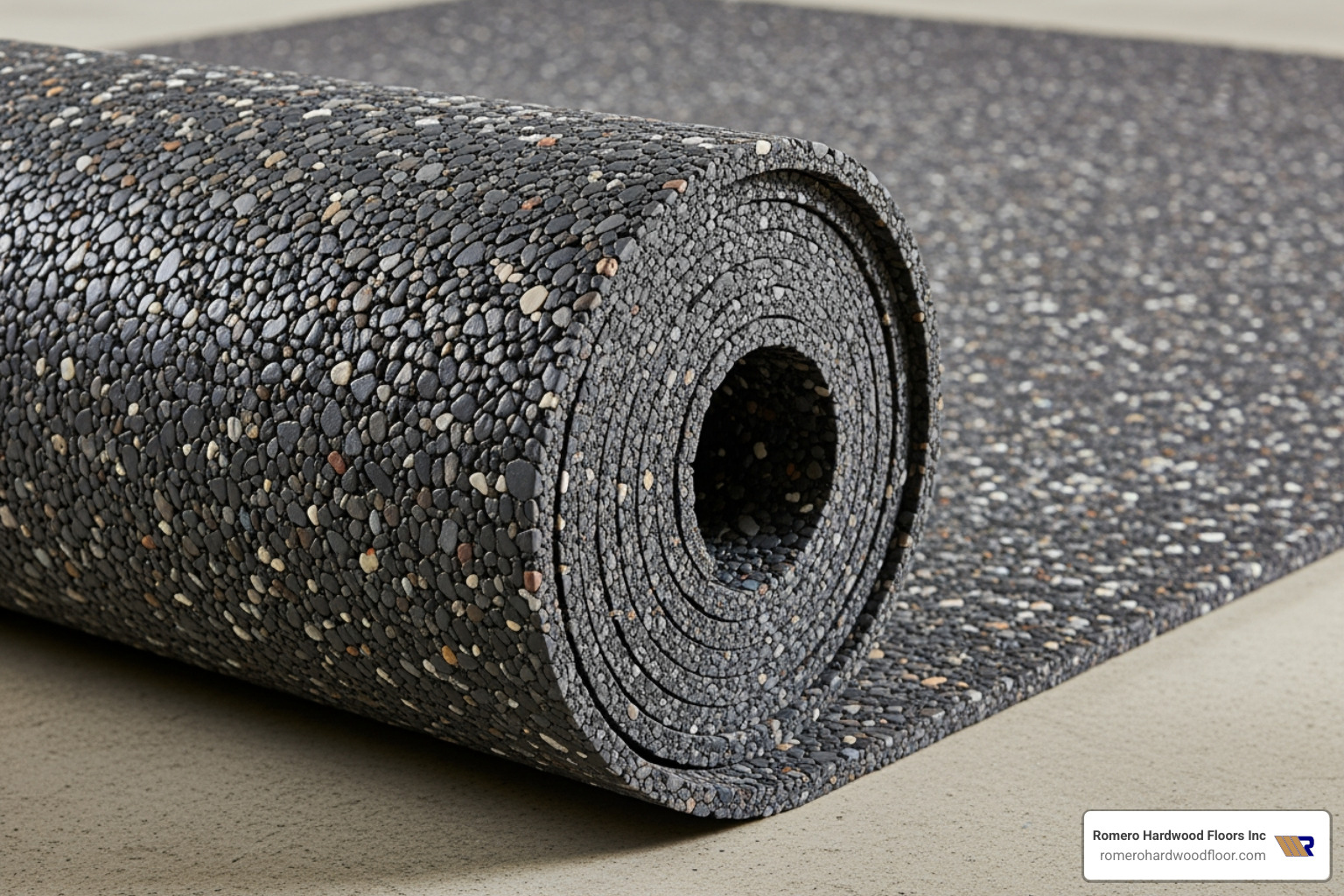
For the ultimate in sound control and durability, rubber and fiber underlayments are the premium choices. Often made from recycled materials, these options deliver top-tier performance for demanding situations.
Pros:
- Superior Sound Control: Recycled rubber underlayments are particularly impressive, with IIC ratings often reaching 73 and STC ratings of 66. This makes them ideal for commercial spaces or residential projects where maximum noise reduction is paramount.
- Durability: Extremely resilient and long-lasting, capable of withstanding heavy traffic and furniture.
- Moisture Resistant: Many rubber underlayments offer excellent moisture resistance, often featuring integrated vapor barriers.
- Thermal Insulation: Provides good thermal insulation, adding to floor warmth.
Cons:
- Highest Cost: These premium options are typically the most expensive, ranging from $0.80 – $3.00+ per square foot.
- Initial Odor: Pure rubber products can sometimes have an initial odor, though this usually dissipates.
- Weight: Can be heavier and a bit more challenging to install than lighter foam options.
While they represent a higher initial investment, the long-term benefits in sound control, durability, and peace of mind often make rubber and fiber underlayments well worth the cost.
How to Choose the Best Underlayment for Your Project
Selecting the best hardwood floor underlayment for your home or business in the Revere, MA area involves more than just picking the cheapest option. It requires careful consideration of several factors to ensure your flooring investment performs optimally for years to come.
Making the right choice will protect your investment, improve comfort, and ensure compliance with any building codes or manufacturer warranties. For a broader perspective on selecting hardwood, refer to our Hardwood Flooring Buying Guide.
Factor 1: Your Subfloor Type
The material and condition of your subfloor are paramount when choosing underlayment.
- Plywood Subfloor: For traditional wood subfloors, a breathable underlayment like felt paper is often suitable, especially for nail-down installations. This allows for natural moisture exchange. Ensure your plywood subfloor is properly fastened, clean, dry, and level before installation.
- Concrete Slab: When installing over a concrete slab, a robust moisture barrier is non-negotiable. Concrete is porous and can wick moisture, leading to severe damage. We always recommend an impermeable vapor barrier or an underlayment with an integrated vapor barrier. It’s crucial to perform a moisture test on the concrete slab beforehand; acceptable moisture levels are typically below 3 pounds per 1,000 square feet per 24 hours. For detailed guidance on this specific scenario, consult our guide on Installing Hardwood Floors on Concrete Slab.
Factor 2: Hardwood and Installation Method
The type of hardwood flooring you’re installing and its installation method will heavily influence your underlayment choice.
- Solid Hardwood (Nail-Down/Staple-Down): For these traditional installations, 15 lb felt paper or rosin paper is typically recommended. It provides a slight cushion, reduces squeaks, and acts as a moisture retarder. It’s important to use an underlayment that provides firm, stable support. Flooring experts generally advise against soft foam paddings under nailed or stapled floors as they can create too much flex and instability.
- Engineered Hardwood (Floating): Floating engineered floors are not attached to the subfloor. For these, foam, cork, or rubber underlayments are excellent choices. Many foam options come with integrated vapor barriers, making them very convenient. These underlayments provide cushioning and allow the floor to expand and contract naturally.
- Engineered Hardwood (Glue-Down): For glue-down installations, the adhesive itself often acts as a moisture barrier and sound reducer, so a separate underlayment might not be necessary. Always check the adhesive manufacturer’s specifications.
Regardless of your hardwood type or installation method, always check the hardwood flooring manufacturer’s specific recommendations and warranty requirements. Failing to use the correct underlayment can void your warranty, turning a small oversight into a huge headache. Our Hardwood Flooring Installation Guide provides more general insights.
Factor 3: Special Considerations
Beyond the basics, certain situations call for specialized underlayment features.
- Radiant Heat Compatibility: If you have a radiant heat system, you need an underlayment specifically designed to be compatible. Look for products labeled for radiant heat use, as they are formulated to improve heat transfer while protecting your floor from thermal expansion. Maximum recommended floor temperatures for radiant heat systems are typically around 81°F. Not all underlayments are suitable, and using the wrong one can hinder heat transfer or damage your flooring. For more information on this, see our article on Engineered Wood with Underfloor Heating.
- Thermal Resistance: Underlayment can increase your floor’s warmth by up to 15%, contributing to a more comfortable home and potentially lower heating costs, especially in older homes in Massachusetts.
- Recommended Thickness: While underlayment thickness typically ranges from 2mm to 6mm, most residential installations use 2-3mm. Thicker underlayment can offer more sound and thermal insulation, but it’s crucial not to go too thick if your flooring manufacturer doesn’t recommend it. Excessive thickness can create too much flex, leading to instability, damage to the flooring’s locking system, and potentially voiding your warranty. Always follow the flooring manufacturer’s specifications.
Frequently Asked Questions
We often get questions from our clients in Revere, MA, and the North Shore about the specifics of underlayment. Here are some of the most common ones:
How do you properly install hardwood floor underlayment?
Proper installation of hardwood floor underlayment is key to its performance. While specific instructions vary by product, here’s a general overview:
- Subfloor Preparation: Ensure the subfloor is clean, dry, level, and free of debris. Repair any loose boards or major imperfections.
- Roll Out Material: Unroll the underlayment material across the subfloor, typically perpendicular to the direction your hardwood planks will run. Cut extra material to run 3 to 4 inches up the wall.
- Align and Secure: Align the first edge to a wall. For felt or rosin paper, overlap edges by about 4-6 inches and staple them down. For foam or combination underlayments, butt the seams together.
- Tape Seams: Tape all seams together with the manufacturer’s recommended tape to create a continuous barrier and prevent moisture penetration or shifting. Tape any slits or cuts made in the underlayment to maintain its integrity.
- Avoid Overlapping (for most types): Unless specifically instructed by the manufacturer (like with felt paper), avoid overlapping foam, cork, or rubber underlayment. Butt the edges together and tape them.
- Edge Trimming: Once the hardwood is installed, trim any excess underlayment that runs up the walls. Shoe molding will cover the small gap.
Always, always, always follow the specific installation guidelines provided by both the underlayment and hardwood flooring manufacturers. This ensures optimal performance and preserves your warranty. For comprehensive installation details, refer to our Hardwood Flooring Installation guide.
Is it ever okay to stack underlayment layers?
This is a common question, and the answer, for most hardwood floor underlayment scenarios, is a resounding no. Stacking underlayment layers is generally not recommended and can actually be detrimental to your hardwood floor.
Here’s why:
- Instability: Multiple layers of soft material create an unstable foundation. This excessive cushion can lead to too much flex underfoot.
- Floor Failure: This instability can cause the locking system of floating floors to fail, leading to gaps, movement, and eventual damage to the planks.
- Voided Warranty: Hardwood flooring manufacturers typically specify the type and thickness of underlayment required. Stacking layers almost certainly voids your flooring warranty.
If you’re seeking improved sound control or comfort, the solution isn’t to stack multiple standard underlayments. Instead, invest in a single, high-performance underlayment specifically designed to deliver superior acoustic properties and cushioning.
What is the recommended thickness for hardwood underlayment?
The recommended thickness for hardwood floor underlayment is a critical factor that depends on your specific flooring product and subfloor.
- Typical Range: Underlayment thickness typically ranges from 2mm to 6mm.
- Most Residential Use: For most residential installations, especially with engineered hardwood, a 2-3mm underlayment is common and usually sufficient.
- Thicker Isn’t Always Better: While it might seem logical that thicker means better sound or comfort, this isn’t always the case. Thicker underlayment (e.g., 6mm) can indeed offer more sound and thermal insulation. However, if it creates too much flex or softness, it can compromise the stability of your hardwood, particularly floating floors, and lead to issues like gapping or damage to the locking mechanism.
- Manufacturer Specifications are Key: Your hardwood flooring manufacturer will have specific requirements or recommendations for underlayment thickness. Always adhere to these specifications to ensure proper performance and to keep your warranty intact.
When in doubt, always consult with your flooring professional or the hardwood flooring manufacturer’s guidelines.
Conclusion: Protecting Your Investment with the Right Foundation
Choosing the right hardwood floor underlayment is a decision that impacts far more than just the initial installation. It’s about protecting your investment, enhancing your home’s comfort, and ensuring your beautiful hardwood floors perform flawlessly for decades to come. From preventing moisture damage and dampening sound to providing warmth and comfort underfoot, underlayment is truly the unsung hero beneath your feet.
We’ve covered the essential types—felt, foam, cork, and rubber—and discussed the critical factors for selection, including your subfloor, hardwood type, installation method, and any special considerations like radiant heat. While the costs of underlayment can range from $0.30 to over $3.00 per square foot, this modest additional investment almost always pays for itself through improved comfort, reduced maintenance, and a significantly longer floor life.
For expert guidance on your flooring project in the Revere, MA area, and throughout the North Shore, trust the experience of Romero Hardwood Floors Inc. Since 2006, we’ve been dedicated to providing top-tier hardwood flooring installation and services, ensuring every detail, right down to the underlayment, is perfect. We’re here to help you make informed decisions that will leave you loving your floors for years to come.
Explore our Hardwood Floor Underlayment Options today, or contact us for a personalized consultation.
Like us on Facebook!